

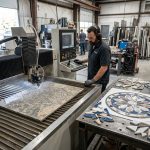
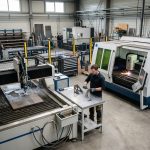
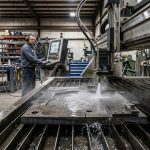
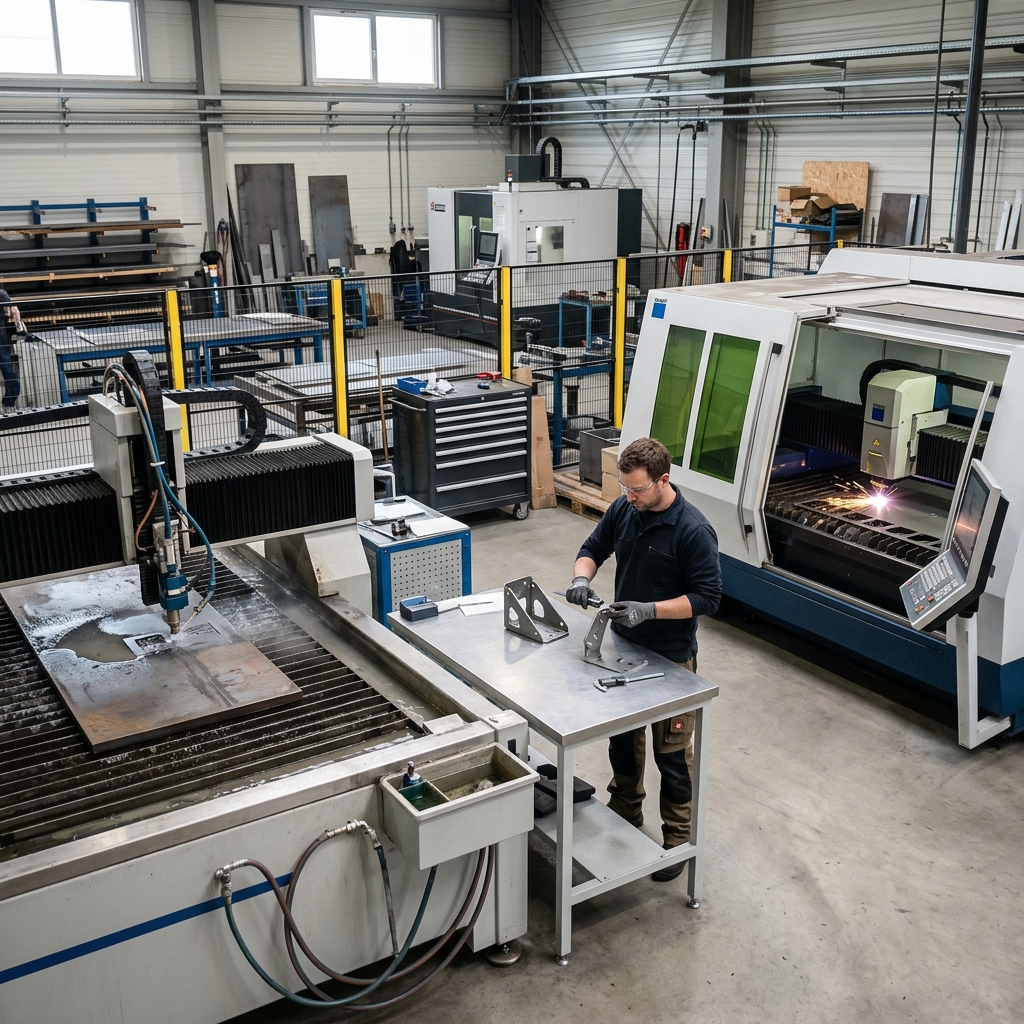

The right choice between waterjet cutting vs laser cutting comes down to your material, thickness, heat sensitivity, and production goals. Laser cutting suits thin sheet metal parts where speed matters most. Waterjet is a cold-cutting process that keeps parts free of a heat-affected zone, making it a strong fit for heat-sensitive materials, thick stock, and nonmetals like stone, glass, rubber, and tile.
Buyers who explore laser cutting alternatives often start with the material and how it responds to heat. This cutting process comparison covers the factors that shape the choice, from edge quality to cost. It also shows what to send with your drawing so a shop can tell you whether waterjet suits your part.
Waterjet vs. Laser at a Glance
How Waterjet Cutting vs Laser Cutting Compares
The waterjet vs laser choice starts with how each process removes material. A waterjet uses a high-pressure stream of water, often mixed with fine abrasive, to erode material along the cut path. A laser uses a focused beam of light to melt, burn, or vaporize material, with an assist gas clearing the kerf.
Waterjet handles metals, stone, glass, tile, rubber, plastics, composites, and foam, and it works well on thick stock. Laser handles metals plus many plastics, woods, and acrylics, and it runs at high speed on thin to moderate sheet. Waterjet edges stay free of thermal discoloration, and laser edges may show oxidation, dross, or hardening.
Use this snapshot of waterjet cutting vs laser cutting as a starting point for your decision. Machine power, setup, and material all shape what each process delivers. The details of your part carry the most weight in the final call.
Material Compatibility
Where Waterjet Fits
Waterjet erodes material with water and abrasive, so it cuts metals like steel, stainless, aluminum, brass, and titanium. It also cuts glass, stone, porcelain, ceramic, rubber, foam, gaskets, composites, and many plastics. Buyers who need metal cutting along with nonmetal parts can often run the whole job on one process.
Where Laser Fits
Laser cutting performs well on carbon steel, stainless steel, and aluminum sheet, along with many plastics, woods, and acrylics. Reflective metals like copper and brass call for the right laser type and power. Glass, stone, and ceramic tile fall outside the usual laser range, and some plastics like PVC release hazardous fumes under a laser beam.
The Practical Question
In any waterjet cutting vs laser cutting decision, material often settles the question first. Parts made from materials that crack, melt, burn, or change under heat point toward waterjet. Thin sheet metal parts with flexible heat limits make laser a fitting option.
Heat and Edge Effects
The Heat-Affected Zone
Laser cutting puts thermal energy into the part and creates a heat-affected zone, a band near the cut edge where the material’s structure may change. This change can show up as edge hardening, discoloration, warping in thin parts, or microcracking in some alloys. Many parts accept this edge, and others need extra machining, heat treatment, or replacement.
Cold Cutting With Waterjet
Waterjet is a cold cutting process, so the material near the edge keeps its original properties. Parts stay free of burn marks and thermal distortion. In a waterjet cutting vs laser cutting review, this matters most for parts that will be welded, machined, or tested later, and for materials that need a cool cut.
Edge Finish
Both processes produce clean edges with different looks. A laser edge may show striations, oxidation, or dross based on settings and assist gas, and a waterjet edge has a fine, sandblasted texture with a slight taper on thick material that the shop controls through cutting speed and setup. Note any critical edge finish on your drawing so the shop can plan for it.
Thickness and Geometry
Material Thickness
Laser cutting runs most efficiently on thin to moderate sheet, and its speed drops as material gets thicker. Waterjet handles thick stock well, and Hydro-Lazer’s systems use a 50,000 PSI stream to cut virtually any material up to 8″ thick. Hard metals and dense materials in that range call for abrasive waterjet cutting, and pure water cutting handles soft materials such as rubber, foam, and gaskets.
Part Size and Shape
Both processes run on CNC controls and cut complex contours, sharp internal features, and nested parts. Laser has a very fine kerf that suits detailed work in thin material, and waterjet cuts detailed shapes across a wide range of thicknesses for flooring inlays, medallions, and signage. Hydro-Lazer cuts complex shapes within a .003″ tolerance on certain materials and handles sheet sizes up to 9 ft × 12 ft.
Tolerance Expectations
Achievable tolerance depends on material, thickness, and machine condition across any waterjet cutting vs laser cutting choice. Put your required tolerances on the drawing. Ask the shop what it can hold for that specific material and thickness.
Cost/Setup Factors to Consider
Cost in waterjet cutting vs laser cutting depends on the part, so the best answer comes from the job details. Material type and thickness set the pace, since thick or hard materials take longer to cut and increase machine-time costs. Total cut length, the number of pierces, and tight corners also add machine time.
Quantity also shapes the price per part. Laser speed on thin sheet can lower the cost per part on large runs, and setup costs spread across big orders for both processes. Consumables add to operating cost too, with garnet abrasive for waterjet and assist gases and power for laser.
Secondary work can shift the total, since a heat-affected edge may need grinding, machining, or heat treatment that a cold waterjet cut can remove for some parts. Tight tolerance and edge specs call for careful cutting and close inspection, and clean CAD files speed up programming. Hand sketches work well too, but add setup time for digitizing, so compare the total cost of a finished, usable part.
Which Process Fits Your Part?
When Waterjet Fits Your Part
Waterjet suits materials that need a cool cut, such as glass, stone, tile, rubber, and composites. It fits parts that must stay free of a heat-affected zone, hardened edges, or thermal distortion, as well as thick stock and mixed metal and nonmetal jobs. Decorative inlays, medallions, and architectural pieces in mixed materials also fall in its sweet spot.
When Laser Fits Your Part
Laser suits thin sheet metal parts with flexible heat limits. It shines when high-volume production speed is a top priority. It also fits parts that need engraving or etching along with cutting, plus fine detail in thin material.
When Both Processes Could Fit
Many parts sit in the middle of the waterjet cutting vs laser cutting decision, like moderately thick steel with some heat sensitivity. A drawing review gives the clearest answer in these cases, and Hydro-Lazer has offered waterjet cutting since 1985 using CAD drawings or hand sketches. We review your material, thickness, and requirements to confirm whether waterjet fits your part, so send your drawing with the material, thickness, quantity, and tolerances for a quote.
FAQs
What is the difference between waterjet cutting and laser cutting?
Waterjet cutting uses a high-pressure stream of water, often mixed with abrasive, to erode material. Laser cutting uses a focused beam to melt or vaporize it. Waterjet is a cold process, and laser is thermal, which affects what each can cut and how the edge behaves.
Which process suits a given part?
The best choice in waterjet cutting vs laser cutting depends on the part’s material, thickness, and heat limits. Waterjet suits heat-sensitive materials, thick stock, and nonmetals like glass or stone. Laser suits fast production of thin sheet metal parts.
Does waterjet cutting leave a heat-affected zone?
Waterjet is a cold cutting process, so parts stay free of a heat-affected zone. Cut edges stay clear of burn marks and thermal distortion. The material near the edge keeps its original properties.
Which materials are best suited to waterjet cutting?
Waterjet cuts glass, natural stone, porcelain, ceramic tile, and many composites. It also handles rubber, foam, and plastics that would melt, burn, or release fumes under a laser. This range makes waterjet a popular choice among laser-cutting alternatives for mixed-material projects.
What affects cutting speed for each process?
Laser cutting runs fast on thin sheet metal. Its speed advantage fades as material gets thick. For some thick or heat-sensitive parts, waterjet can be more efficient overall because it skips secondary finishing.
How thick can waterjet cutting go?
Waterjet suits thick materials well. Hydro-Lazer’s systems cut virtually any material up to 8″ thick using a 50,000 PSI stream. The practical limit depends on the material and the required edge quality.
What drives the cost of each process?
Cost in waterjet cutting vs laser cutting depends on the part. Laser often offers a low cost per part for thin, high-volume sheet metal, and waterjet proves cost-effective for thick, heat-sensitive, or nonmetal parts that would otherwise need extra finishing. The best measure is the total cost of a finished part.
What should a cutting quote request include?
Include a CAD file or drawing along with the material type, thickness, quantity, tolerances, and any edge finish needs. Hydro-Lazer accepts both CAD drawings and hand sketches through its quote request form. Complete details lead to a fast and accurate quote.