


Seven factors shape waterjet cutting quality: material, thickness, kerf and taper, edge finish, tolerance expectations, machine setup, and drawing quality. When buyers check each one before ordering, they get parts that fit the job and quotes that match the work. Every factor is something you can plan for, so good cuts start with good project details.
At Hydro-Lazer, we have cut custom parts and flooring inlays in Freeport, PA since 1985. Our team sees every day how small project details shape the finished part. This guide walks you through each factor so your next quote request is clear, complete, and ready to price.
What Does “Quality” Mean in Waterjet Cutting?
Quality in waterjet cutting comes down to how well the finished part matches your drawing and your use. Buyers often look at edge quality, cut tolerance, surface finish, and waterjet accuracy as one package. Each of these points ties back to choices made before the machine starts.
A visible glass panel and a hidden steel bracket each call for their own level of finish. The best cutting quality matches the part’s purpose and budget. Clear goals help your vendor pick the right settings from day one.
How Buyers Can Measure Waterjet Cutting Quality
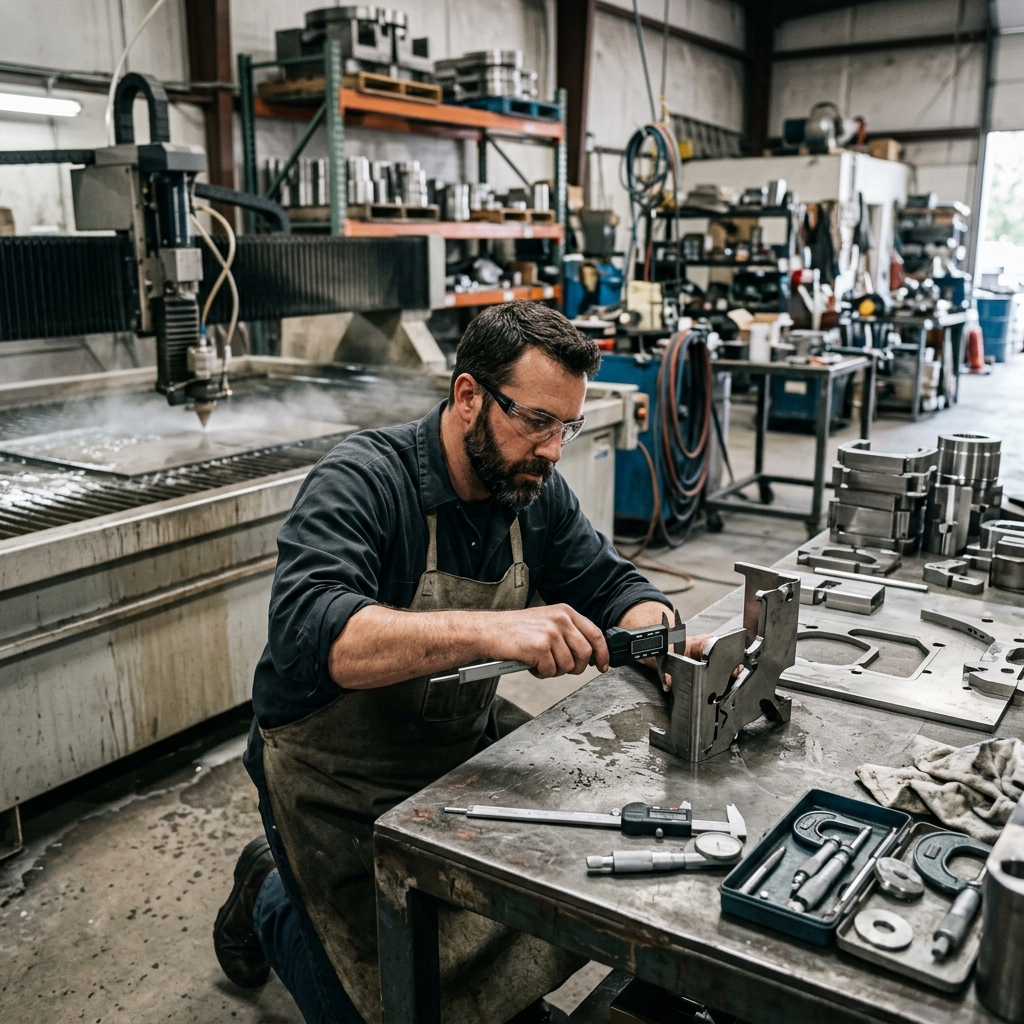
Buyers can judge waterjet cutting quality by checking a few clear signs on the finished part. Measure key dimensions against the drawing, check the edge texture, and confirm the walls stay square from top to bottom. These checks give you a simple way to compare sample parts from any vendor.
Agree on these checks before the job begins. Share which features matter most, such as hole positions, outside profiles, or mating edges. Your vendor can then focus care where it counts and keep the rest of the job efficient.
7 Factors That Affect the Finished Cut
The seven factors below work together, so changing one often shifts the others. Use this list as a checklist when you prepare specifications or review a vendor. Each point ties back to waterjet cutting quality and a clear quoting process.
Some factors sit with the buyer, like the drawing and tolerance callouts. Others sit with the shop, like machine setup and cut speed. Great parts come when both sides share details early.
1. Material Type
Every material reacts to the water stream differently. Metals, glass, stone, plastic, and rubber each need settings matched to their hardness and structure. Hard materials such as steel call for abrasive cutting, and soft materials such as rubber often cut well with water alone.
Material condition also matters for the finished edge. Flat, clean stock with a consistent makeup gives the most predictable cut. Tell your vendor the specific grade or type so they can plan the right approach.
2. Material Thickness
Thickness shapes cut speed, edge texture, and taper. Our systems handle virtually any material up to 8″ thick, which covers a wide range of projects. Thick parts need slow, steady cutting to hold a clean edge, and that time shows up in the quote.
Share the full thickness range for your job, including any stacked or layered parts. This detail helps your vendor plan cut paths and timing with care. We cover thickness in more detail in the material section below.
3. Kerf and Taper
Kerf is the width of material the water stream removes as it cuts. Taper is the slight angle that can form along the cut wall from the top surface to the bottom. Both affect final part size, so they belong in every quality discussion.
Good shops account for kerf in the cut path so the finished part matches the drawing. Taper control comes from the right cut speed and machine setup. Ask how your vendor manages both for your material and thickness.
4. Edge Finish
Edge finish describes how smooth the cut wall feels and looks. Waterjet edge quality ranges from a fine, smooth surface to a lightly textured one, depending on speed and settings. Waterjet is a cold cutting process, so edges stay free of heat-affected zones, fumes, and mechanical stress.
Decide how the edge will be used before you request a quote. A visible edge on a sign or glass panel calls for a fine surface finish, and a hidden edge can run at a production speed. Clear edge notes support waterjet cutting quality and help keep pricing fair.
5. Tolerance Expectations
Tolerance is the allowed range of variation on a dimension. We use CNC and optical equipment to cut complex shapes and contours within a .003″ tolerance on certain materials. Achievable tolerance in industrial waterjet work always depends on the material, thickness, and part design.
Call out tight tolerances only on features that need them. Open tolerances on other areas keep cutting time efficient and costs in check. Ask your vendor to confirm what fits your specific part before production starts.
6. Machine Setup and Cut Speed
Setup covers pressure, abrasive flow, nozzle condition, and how you hold the material in place. Our waterjet cutting systems use a 50,000 PSI stream of water generated by a WSI 50 HP unit. Steady fixturing and regular nozzle care help each piece match the last.
Cut speed balances time and finish. Shops tune speed for each job based on the edge and tolerance the drawing asks for. Asking about setup gives you a clear view of how a vendor protects quality.
7. Drawing Quality
A clean drawing is one of the simplest ways to protect your cut. Clear dimensions, units, and material notes help the shop program the job right the first time. We can work from hand sketches or CAD drawings and use offline programming and CAD digitizing software to render designs.
Complete drawings keep the project moving on schedule. They also make quotes easy to compare across vendors. The drawing section below lists what to include.
How Material and Thickness Change the Result
Material and thickness work as a pair in every waterjet job. Hard metals and stone call for abrasive cutting, and thick stock calls for steady, controlled speeds. Together they set the starting point for waterjet cutting quality on any part.
Metals such as steel, stainless, and aluminum cut cleanly with abrasive waterjet, and the cold process keeps their properties intact. Our metal cutting services cover a wide range of metal parts and thicknesses. Share the alloy and thickness up front so the shop can plan the right settings.
Glass needs careful support to protect edges and corners during the cut. Plastics and rubber parts also cut well with good fixturing. Matching settings to each material keeps edges clean and parts on spec.
What Buyers Should Put on the Drawing
A strong drawing answers the shop’s questions before they come up. Include overall dimensions, units, material type, grade, and thickness. Add the quantity you need so the shop can plan nesting and setup time.
Mark critical features, tolerance callouts, and edge finish needs on the drawing itself. Note any areas where taper or kerf affects fit, such as mating parts or press fits. These notes tie each requirement to waterjet cutting quality and keep the quote accurate.
Send files in a common CAD format when you have one. Hand sketches with clear measurements work too, since we can digitize them. Include a contact name for quick answers on any detail.
Questions to Ask Before Requesting a Quote
Good questions help you pick a vendor who fits your project. Ask what materials and thicknesses the shop handles, and what tolerance it can hold on your specific material. Ask how the team manages kerf, taper, and edge finish for parts like yours.
Ask whether the shop can handle your maximum part size and order quantity. We offer production for any quantity, with sizes up to 9 ft x 12 ft. Ask to see sample parts or project photos so you can judge waterjet cutting quality with your own eyes.
Once you have answers, send your drawing through our quote request form. Our team reviews every file and follows up with any questions. Clear inputs on both sides lead to a quote you can trust.
FAQs
What has the biggest effect on waterjet cut quality?
Material type and thickness set the starting point for waterjet cutting quality on any job. Machine setup, cut speed, and drawing clarity then shape the finished edge and dimensions. Checking all seven factors together gives the most reliable parts.
What is kerf in waterjet cutting?
Kerf is the narrow channel of material the water stream removes during a cut. Shops offset the cut path to account for kerf so finished parts match the drawing. Asking about kerf compensation is a smart step when parts must fit together.
What causes taper on a waterjet cut edge?
Taper forms when the water stream spreads slightly as it moves through the material. Cut speed, thickness, and machine setup all influence how much taper appears. Shops manage taper with careful speed control and a setup matched to the part.
How accurate is waterjet cutting?
Waterjet accuracy depends on the material, thickness, and part design. Hydro-Lazer uses CNC and optical equipment to cut complex shapes within a .003″ tolerance on certain materials. Ask your vendor to confirm the tolerance for your specific part before ordering.
Does waterjet cutting leave a heat-affected zone?
Waterjet is a cold cutting process, so parts stay free of heat-affected zones. The material keeps its original properties, with zero fumes or mechanical stress from the cut. This makes waterjet a strong choice for heat-sensitive parts.
Can waterjet cut glass cleanly?
Yes, waterjet can cut glass into custom shapes with clean edges when the setup and support fit the job. Careful handling protects corners and thin areas during the cut. Our glass services team can review your design and material before cutting begins.
What should buyers include in a waterjet cutting RFQ?
Include the drawing, material type and grade, thickness, quantity, and any tolerance or edge finish callouts. Notes on critical features help the shop focus on what matters most. Complete details support waterjet cutting quality and lead to a clear, accurate quote.
How thick can waterjet cut?
Hydro-Lazer systems can cut virtually any material up to 8″ thick. Thick parts take extra cutting time, and taper and edge texture need careful attention. Share your full thickness range so the shop can plan the right speed and settings.
How can buyers compare waterjet vendors on quality?
Ask each vendor whether they can share sample parts and tolerance capabilities for your material. Review how they handle drawings, kerf, taper, and questions during quoting. Comparing these points side by side shows which shop can deliver the waterjet cutting quality your project needs.