

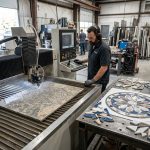
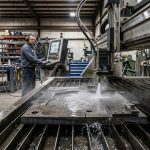
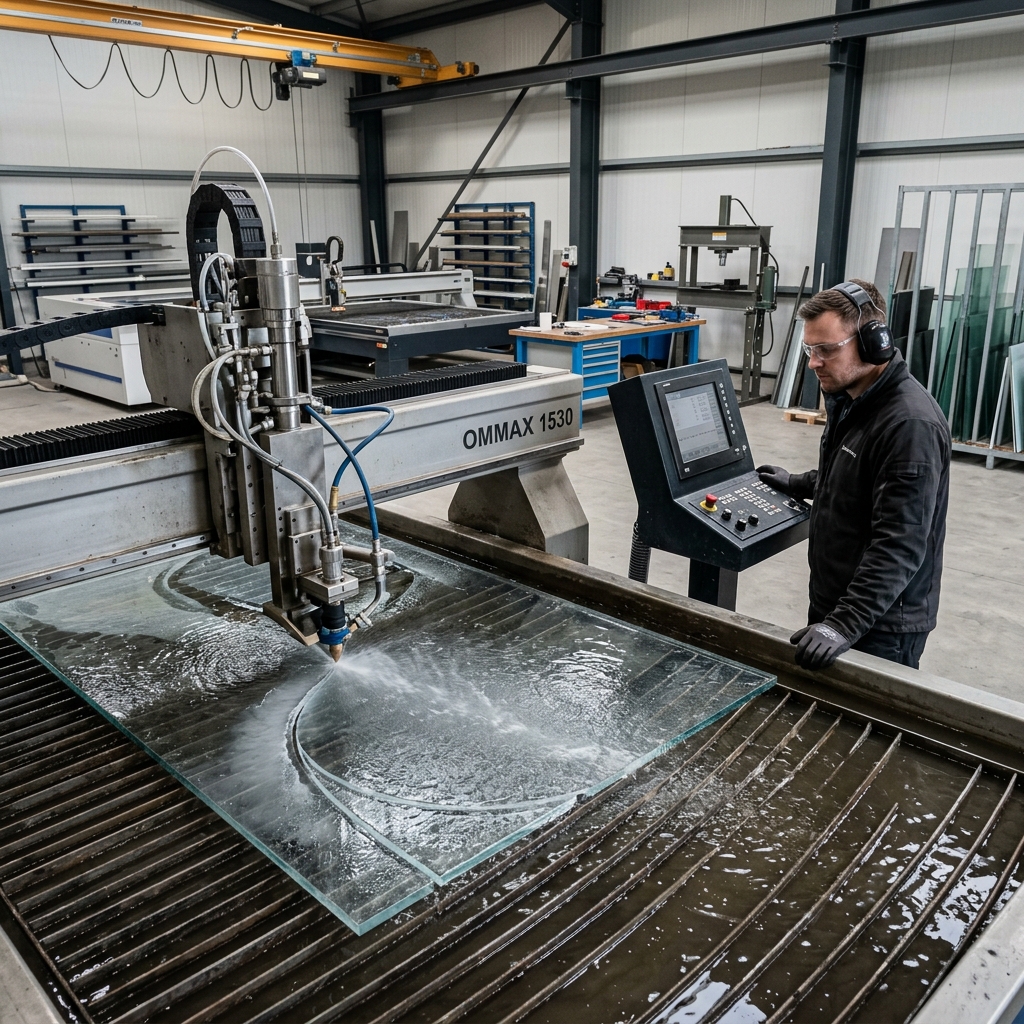

Projects that call for curves, contours, detailed shapes, or clean slits in glass panes and sheets are ideal for glass waterjet cutting. The process uses a focused stream of water to shape the glass, so each piece stays free of heat damage and keeps its form. That makes it a smart choice for custom glass cutting on mirrors, ornaments, ultrathin panels, and multilayer glass.
Architects, fabricators, and designers often need to know whether waterjet is the right method before drawings go out for a quote. Our team at Hydro-Lazer offers glass cutting services that help buyers plan each part with confidence. This guide walks through project fit, top applications, design and edge factors, and the details to send with your drawing.
When Is Waterjet a Good Fit for Glass?
Glass is brittle and tends to crack under high stress. Cutting methods that create heat or pressure at the cut line, such as plasma cutting, put the piece at risk of chips and fractures. Waterjet keeps glass safe because it operates without fumes, mechanical stress, or heat-affected zones.
Our system uses a 50,000 PSI water stream generated by a WSI 50 HP pump. CNC and optical equipment guide each cut through complex shapes and contours. We have specialized in waterjet cutting since 1985, and we handle glass waterjet cutting with extreme caution.
Signs Your Project Is a Good Fit
Curves, contours, and freeform outlines strongly suggest waterjet is right for your part. Small features, tight shapes, and slits with clean edges also point to this method. Glass sensitive to cracking benefits from a heat-free cut.
Projects that aim for minimal material waste are another good match for glass waterjet cutting. The process preserves the sheet’s form and structure and keeps scrap low. We also offer production capability for any quantity, so matching parts can come from the same digital file.
Planning Around Material Limits
Precision glass cutting with waterjet covers a wide range of work, and a few limits are worth planning for. As a general industry rule, tempered glass needs to be cut to shape before the tempering process. Tempered glass is engineered to shatter when its surface is compromised, so we shape it first.
Thickness, tolerance, and edge goals vary by glass type. Our team confirms these details during quoting so every project starts with clear expectations. We can also cut projects that combine glass with metal or stone in our shop, which keeps sourcing simple.
Which Glass Applications Benefit Most?
Waterjet cut glass appears in many types of work, from small decorative pieces to technical parts. Our verified projects show how glass waterjet cutting handles delicate and detailed glass with care. You can see the shapes and detail our process produces in our photo gallery.
Ultrathin and Multilayer Glass
Very thin glass is prone to cracking under heat or tool pressure. We have cut ultrathin glass panels for smartphones, where accuracy and clean edges are essential. The waterjet stream shapes these panels while protecting their delicate structure.
Layered glass adds complexity, since each layer needs a clean cut and must stay bonded. Our verified work includes multilayer glass for military vehicles. These projects show how the process creates accurate, clean slits in demanding materials.
Mirrors, Ornaments and Showpieces
Mirrors pair a brittle base with a finished surface that needs protection. Waterjet cuts mirrors free of cracks, which makes it a strong fit for custom mirror shapes. Clear shape details on the drawing help us plan each cut with care.
Glass ornaments and showpieces often depend on fine contours and detailed outlines. Waterjet shapes these pieces from glass panes and sheets with precise, smooth edges. The method suits decorative work where every curve needs to look clean.
Custom and Architectural Glass Shapes
Designers and architects working with architectural glass often need curved edges, contoured outlines, or shapes drawn for a specific space. A CAD path guides glass waterjet cutting along each outline, turning custom designs into finished glass parts. This makes custom glass cutting a practical option for unique design features.
Early details help keep these projects on track. Share the glass type, dimensions, and full project specifications with our team at the start. We review feasibility up front so you can move forward with your design confidently.
Design and Edge Considerations
Strong results begin at the design stage. A well-planned drawing helps glass waterjet cutting move smoothly from concept to finished part. The factors below guide that planning.
Edge Quality and Geometry
Waterjet makes precise cuts free of burrs and creates smooth edges that can eliminate extra tooling. Some projects call for a specific edge treatment, such as polishing or beveling for display or safety. Please note that requirement on the drawing so the quote reflects it.
Detailed shapes are a strength of waterjet, and very small features still deserve a careful review. Narrow bridges between cutouts and sharp inside corners can be fragile in glass. Flag these areas so our team can suggest design adjustments where needed.
Tolerances, Size and Material
Our CNC and optical equipment cuts complex shapes and contours within a .003″ tolerance on certain materials. Achievable tolerance depends on the material and part, so list the tolerances that matter for fit and function. Our team confirms what is achievable for your glass.
We offer production capability for any quantity, with sizes up to 9 ft x 12 ft. Include overall dimensions and quantities early so handling and scheduling can be planned. Also name the glass type, such as float, laminated, mirrored, coated, or multilayer, and note if it will be tempered after cutting.
What Information Should Be Included With a Drawing?
A complete project package helps our team review feasibility and prepare an accurate estimate. We accept both hand sketches and CAD drawings, and we render designs using offline programming and CAD digitizing software. A simple sketch is enough to start a conversation about glass waterjet cutting for your part.
Start with the drawing or file, such as a DXF, DWG, or dimensioned sketch. Add the glass type, thickness, overall dimensions, critical tolerances, and edge requirements. Include the quantity, material supply plans, end use, and timeline to round out the package.
Ready to qualify your glass project? Send your drawing, sketch, or specifications through our quote request form, or call 724-295-9100. Our team will review your design and confirm whether glass waterjet cutting is the right fit.
FAQs
Can a waterjet cut glass safely?
Yes, a waterjet cuts glass safely when the right setup and handling are in place. The process uses a high-pressure stream of water, so the glass stays free of heat damage. This makes glass waterjet cutting a trusted method for brittle materials.
What glass projects are best for waterjet cutting?
Projects with curves, contours, detailed shapes, or slits are the strongest match. Examples include mirrors, glass ornaments, showpieces, ultrathin panels, and multilayer glass. Each of these benefits from a precise cut that protects the material.
How should tempered glass be handled for waterjet projects?
Tempered glass needs to be cut to shape before the tempering process begins. Tempering makes the glass shatter when its surface is compromised. Plan all cuts first, then temper the finished pieces if your project requires it.
Do waterjet cut glass edges need finishing?
Waterjet produces smooth edges free of burrs, which often eliminates extra tooling. Some projects call for polishing or beveling for display or safety. List any edge treatment on your drawing so it is included in the quote.
What file works best for a custom glass cutting quote?
A CAD drawing is ideal, and we also accept hand sketches. Our team digitizes designs with CAD software when needed. Include the glass type, thickness, dimensions, quantity, and critical tolerances for a fast review.
What size glass pieces can Hydro-Lazer cut?
We can produce any quantity, with sizes up to 9 ft x 12 ft. Large format panels benefit from early planning. Share overall dimensions and glass type at the start so our team can confirm handling and feasibility.
What tolerance can waterjet achieve on glass?
Our CNC and optical equipment holds a .003″ tolerance on certain materials. Achievable tolerance depends on the glass type and the part design. Our team confirms workable tolerances for your project during quoting.
Where are examples of Hydro-Lazer waterjet work available?
Our photo gallery shows a range of finished waterjet projects. It is a helpful reference when you discuss design ideas with our team. Bring any images or sketches that inspire you, and we will help shape them into a cut plan.
Why choose Hydro-Lazer for glass projects?
Hydro-Lazer has specialized in waterjet cutting since 1985. Our team handles glass waterjet cutting with extreme caution to protect every workpiece. We focus on minimal material waste and clean, accurate results.