

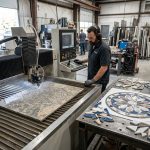
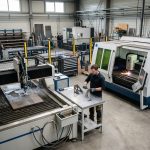
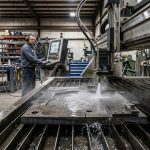
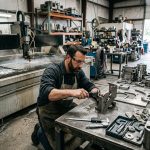

Abrasive waterjet is the right process for hard and dense materials such as steel, aluminum, brass, copper, granite, marble, ceramic, and composites. It blends a granular abrasive, most often garnet abrasive across the industry, into a high-pressure water stream for clean hard material cutting. This cold method handles waterjet metal cutting and stone waterjet cutting while keeping parts free of heat distortion and work hardening.
Soft materials such as foam, rubber, and gaskets often cut well with pure water alone. Harder parts call for abrasive, and that choice shapes cost, finish, and lead time. This guide covers how the process works, which materials need it, and what to send before you ask for pricing.
Hydro-Lazer, Inc. has cut materials in Freeport, Pennsylvania since 1985. It’s abrasive services focus on these hard material jobs every day. We work with OEMs and fabrication centers that need precise parts on schedule.
What Is Abrasive Waterjet Cutting?
Abrasive waterjet cutting is a cold, CNC-controlled process that uses water and abrasive particles to cut along a programmed path. The jet erodes material bit by bit, so even tough stock separates cleanly. It uses the same pump system as standard waterjet cutting, a process with a long waterjet history, and adds one step: adding abrasive.
How the Process Works
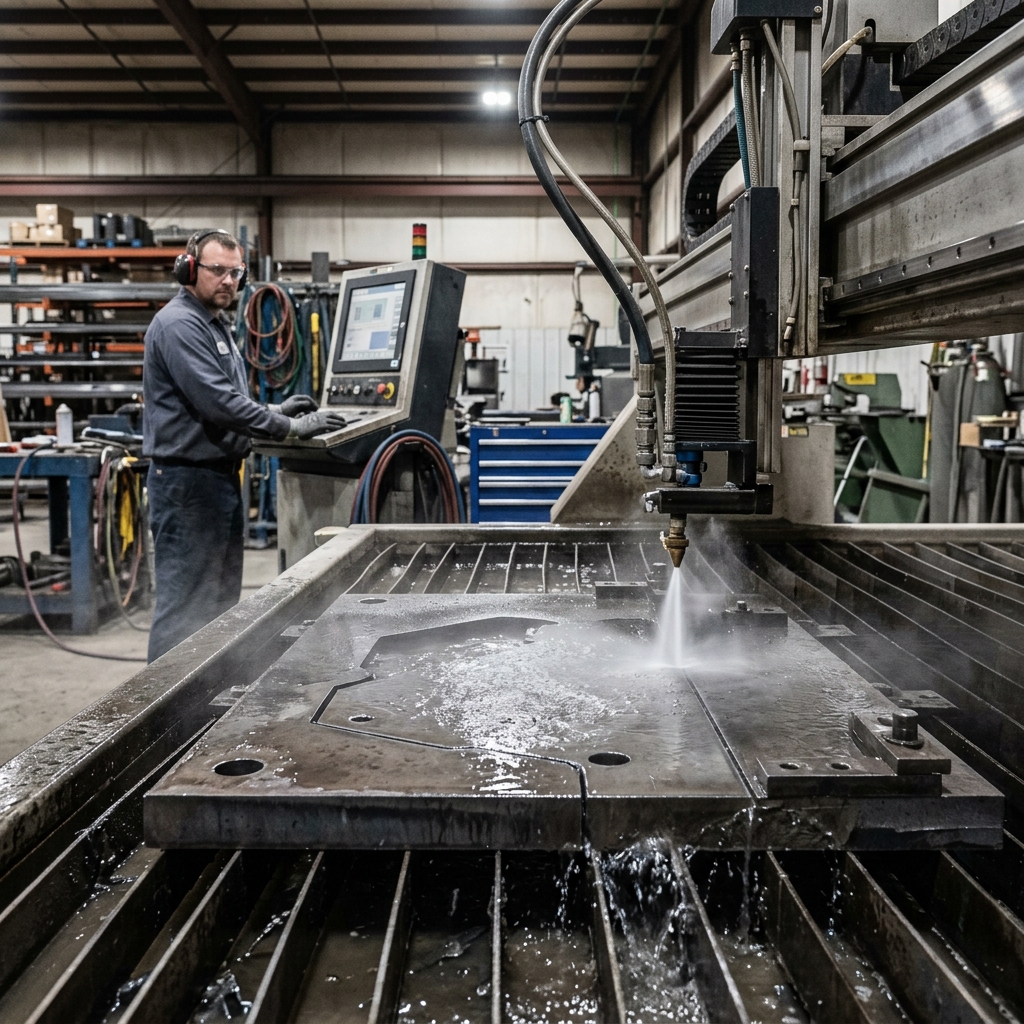
A high-pressure pump pressurizes water to 40,000-55,000 psi. The water passes through a small orifice inside the nozzle, forming a tight, focused stream. In the venturi section of the cutting head, granular abrasive enters the stream.
The water and abrasive then travel through a ceramic mixing tube, where they combine fully. The mixture leaves the nozzle at high speed and strikes the kerf face. The abrasive particles do the cutting work as the abrasive waterjet follows the programmed path.
Why It’s Considered A Cold Process
The process generates zero heat, so parts stay free of a heat-affected zone, thermal distortion, and hardened edges. The jet reaches the part through water and abrasive alone, keeping tool pressure off the workpiece and helping preserve the material’s original properties and component strength across our cutting solutions.
Which Materials Typically Need Abrasive Cutting?
Harder and denser materials are the best candidates for abrasive cutting. Metals, stone, ceramics, and composites all fall into this group. Hydro-Lazer cuts a wide range of these materials with care for each one’s structure.
Metals
Steel, aluminum, brass, and copper rank among the most common abrasive waterjet jobs. Buyers choose waterjet metal cutting to keep parts free of the heat effects of plasma or laser cutting, making it well suited for materials that may warp or harden under thermal processes. These capabilities make metal cutting services a practical option for projects requiring precise cuts across different grades and thicknesses. Our team reviews each job for material grade, thickness, and finish requirements to determine the right cutting settings for the part.
Stone and Ceramics
Granite, marble, and ceramic are classic picks for stone waterjet cutting. Abrasive cutting creates detailed profiles, curves, and inlay pieces in stone and ceramic. Waterjet cutting delivers clean results on brittle stone and helps limit chipping.
Composites, Plastics, and Other Materials
Composites, plexiglass, acrylic, plastics, polyurethane, wood, and cork all cut well with abrasive. Some of these softer materials also cut well with pure water. Thickness, edge needs, and how the material reacts to the jet decide the best method.
When Is It Better Than Pure Water Cutting?
Pure water cutting and abrasive waterjet cutting share the same high-pressure system. Pure water uses the stream alone, while abrasive cutting adds grit for tougher stock. The right choice depends on the material and the finish you need.
Choose Abrasive When
Choose abrasive when the material is hard or dense, such as metal, stone, ceramic, or composite. It is also the right choice when strong materials need a smooth, burr-free edge that reduces or removes secondary finishing. Projects with heat-sensitive alloys also benefit, since the process produces no fumes, toxic gases, or thermal stress.
Detailed geometry is another strong reason to choose abrasive. CNC-controlled machines with multiple axes follow complex shapes to tight specifications. This makes the method a good fit for precise parts across many industries.
Pure Water May Be Enough When
Pure water often works well for soft materials such as foam, rubber, gaskets, and some thin plastics. It also suits jobs where abrasive particles add little value to the cut. Our rubber cutting projects show how simple and clean this process can be.
Our waterjet cutting explains the broader service and the options we offer. We review your drawing and tell you whether your part needs abrasive. That way, you get the right method from the first quote.
What Project Details Affect the Cut?
Several project details affect cut quality, lead time, and the cost of an abrasive waterjet job. Clear details help us plan the right settings from the start. The points below cover what matters most.
Material Type and Grade
Each alloy, stone type, and composite layup cuts differently. Naming the specific material and grade helps us plan the best approach. This detail also helps us confirm the right abrasive setup.
Thickness
Thicker material takes longer to cut and can affect edge traits such as taper. Always state the precise thickness of your stock. A single clear number helps us quote time and cost with confidence.
Geometry and Feature Size
Tight inside corners, small holes, and fine details affect cutting time and feasibility. Complex profiles are a strength of the abrasive process. Clear definitions on the drawing keep these features accurate.
Tolerance Requirements
Hydro-Lazer states that its abrasive process holds accuracy within ±0.003″ on detailed shapes. Achievable tolerance depends on the material, the thickness, and the part itself. Mark only the critical tolerances on your drawing so the quote reflects what matters.
Edge Finish Expectations
Tell us if the edge will be visible or must mate with another part. Finish requirements shape the cutting settings we use. Clear finish notes help us deliver clean edges that match your needs.
Quantity and Turnaround
Single prototypes and production runs follow different pricing. Share both the quantity and your target delivery date. This helps us schedule your job and give an accurate lead time.
Buyer Checklist
A complete quote package for abrasive waterjet work starts with a dimensioned drawing or CAD file in DXF, DWG, or PDF format. Add the material type and grade, such as 304 stainless, 6061 aluminum, or Carrara marble. Include the precise stock thickness and mark your critical tolerances clearly.
Note any edge finish needs, especially for visible or mating edges. List the quantity for prototypes and production runs, along with your target delivery date. Tell us whether you will supply the material or need us to source it.
Share the industry or application, such as aerospace, medical, construction, or semiconductor work. Some applications carry added requirements, so this context helps us plan. A full package cuts down on back-and-forth and gets you an accurate price faster.
FAQs
What is an abrasive waterjet used for?
It cuts hard and dense materials such as steel, aluminum, brass, copper, granite, marble, ceramic, and composites. Abrasive particles mixed into a high-pressure water stream let the jet erode tough stock with ease. Aerospace, construction, medical, and semiconductor makers use it widely.
What abrasive is used in waterjet cutting?
Garnet is the most widely used abrasive in the waterjet industry. It is hard, sharp, and has a consistent particle size. The abrasive enters the stream inside the cutting head and mixes in a ceramic mixing tube before it hits the material.
How does abrasive cutting compare with pure water cutting?
Pure water uses high-pressure water alone and suits soft materials like foam, rubber, and gaskets. Abrasive cutting adds granular grit so the stream can cut metals, stone, ceramics, and composites. Both are cold processes that keep parts free of a heat-affected zone.
Does abrasive waterjet cutting cause heat damage?
The process stays cold from start to finish. Parts remain free of a heat-affected zone, thermal distortion, and work hardening. This makes it a strong choice for heat-sensitive metals and parts that must keep their original properties.
How accurate is abrasive cutting?
Accuracy depends on the material, the thickness, and the part geometry. Hydro-Lazer states that its abrasive process holds accuracy within ±0.003″ on detailed shapes. Mark your critical tolerances on the drawing so we can confirm feasibility.
Is abrasive waterjet a good alternative to laser or plasma cutting?
The best choice depends on the part. The abrasive process avoids the heat effects of laser and plasma and handles stone and many composites well. Laser or plasma may fit some thin metal, high-volume jobs, so material, thickness, edge needs, and cost guide the final choice.
Can waterjets cut stone and tile?
Yes, stone waterjet cutting ranks among the most common abrasive applications. It covers granite, marble, and ceramic. The process creates detailed profiles, curves, and inlay pieces with clean edges.
What do buyers need to send for a quote?
Send a dimensioned drawing or CAD file, the material type and grade, the stock thickness, and the quantity. Add critical tolerances, edge finish needs, your target delivery date, and who will supply the material. Submit everything through our quote request form for fast pricing.