




Sheet metal fabrication services turn flat metal stock into finished parts through cutting, forming, joining, and finishing. Before you send an RFQ, confirm which steps your part needs and specify the exact material and thickness. Then gather the drawings, quantities, and tolerances a shop needs to price the job. Clear details up front lead to faster, more accurate quotes and a smoother production run.
Cutting is usually the first step, and it sets the accuracy for every step that follows. Hydro-Lazer, Inc. has specialized in this step since 1985 from our shop in Freeport, Pennsylvania. We serve buyers in aerospace, military, industrial, and architectural work. This guide shows where waterjet cutting fits and how to prepare an RFQ that earns a usable quote on the first try.
What Counts as Sheet Metal Fabrication?
Sheet metal fabrication is any process that shapes thin, flat metal into a part, assembly, or structure. Most sheet metal fabrication services combine four stages. Each stage affects cost, lead time, and part quality.
Cutting
Cutting turns sheet or plate into a flat blank or a finished profile. Common methods include waterjet, laser, plasma, punching, and shearing. Each method handles heat, edge quality, and thickness differently.
Forming
Forming bends, rolls, or stamps the cut blank into its final 3D shape. The flat pattern has to account for how metal stretches during bending. This links your cutting and forming choices closely together.
Joining
Joining connects parts through welding, riveting, fasteners, or adhesives. Welded assemblies need clean, accurate edges to fit properly. Good cutting makes fit-up faster and easier.
Finishing
Finishing covers deburring, grinding, powder coating, plating, and other surface treatments. A clean edge from the cutting stage keeps finishing work light. This saves time and cost on every part.
Sheet metal usually refers to stock up to about 1/4 inch thick, and heavier stock is called plate. Many custom metal fabrication projects use both. The cutting method you choose should handle the full thickness range in your bill of materials.
Where Waterjet Cutting Fits In
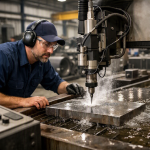
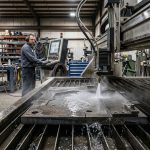
Waterjet cutting is a cold cutting process. It uses a high-pressure stream of water, often mixed with crushed garnet abrasive for metals, to follow a programmed path. The cut adds zero heat, so edges stay free of heat-affected zones, hardened spots, and thermal warping.
Many buyers of sheet metal fabrication services choose waterjet metal cutting for these reasons:
- Material properties stay intact. Edges keep their original hardness and temper, which matters for aerospace and defense parts.
- Parts bend and weld well later. Clean, cool edges respond predictably during forming and welding.
- One process covers thick and mixed materials. Thin sheet, heavy plate, and nonmetals can all go to one vendor.
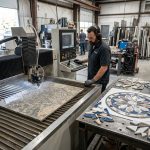
- Complex shapes cut cleanly. Tight contours, sharp internal corners, and detailed profiles come straight from CAD files with zero custom tooling.
Laser or punching also suits very thin, simple parts in high volumes where speed is the top priority and heat is a minor factor. A good partner helps you match the process to the part. Buyers often choose our waterjet cutting when the material needs heat protection or requires a deep cut.
Materials and Thickness Waterjet Handles Well
Waterjet cuts almost any material, and metal is one of its most common uses. This range makes it a strong fit for many sheet metal fabrication services projects. Below are the key points to check before you request a price.
Common Metals
Waterjet sheet metal cutting regularly handles carbon steel, stainless steel, aluminum, copper, brass, titanium, and hardened tool steels. Heat-sensitive alloys and reflective metals are good candidates. Waterjet keeps these materials cool and handles reflective surfaces with ease.
Thickness Range
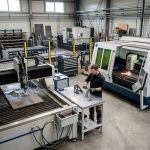
Our system uses a 50,000 PSI stream from a WSI 50 HP pump and cuts material up to 8 inches thick. One RFQ can cover thin-gauge brackets and heavy plate parts from a single supplier. Our metal cutting services cover both ends of that range for prototypes and production runs.
Precision
On certain materials, our CNC and optical equipment holds tolerances within .003 inch. The final tolerance depends on material type, thickness, and part geometry. List your critical dimensions in the RFQ so the shop can confirm what it can hold on your part.
What to Include in Your RFQ
A complete fabrication RFQ answers the shop’s questions up front. When you request sheet metal fabrication services, include these details:
- Drawings or files. CAD files work best, and we can also digitize hand sketches into a cut path.
- Material and grade. Name the exact grade, such as 304 or 316 stainless, along with any temper or condition.
- Thickness. List the thickness for every part, especially when the order mixes sheet and plate.
- Quantity and schedule. Share prototype counts, production quantities, and whether the work is a single order or a yearly contract run.
- Tolerances. Mark the critical dimensions and note which ones can follow standard tolerances.
- Edge and finish needs. Note any edge quality goals, deburring, or surface treatments.
- Later operations. State if parts will be bent, welded, machined, or coated after cutting.
- Inspection or certification needs. Call out quality standards early, since we meet military inspection standard MIL-I-45208A.
- Delivery date and location. Clear deadlines help the shop schedule your job well.
Common Fabrication Mistakes to Avoid
Most RFQ delays and cost overruns trace back to a few simple oversights. Good habits keep your sheet metal fabrication services project on time and on budget. These tips help your quote go smoothly.
Set tight tolerances only where they count. Reserve your tightest tolerances for features that affect fit or function. This keeps costs in line and helps the part perform as planned.
Send the latest revision. Confirm the revision level before you send files. Current drawings prevent rework and requotes.
Name the full material spec. List the grade, thickness, and condition every time. Complete specs let the shop quote quickly and accurately.
Plan for bend allowances. Parts that will be formed need a developed flat pattern that accounts for metal stretch. Cutting from this pattern ensures a proper fit.
Give features room near edges and bends. Place holes and slots a safe distance from bend lines and edges. This keeps them true in shape during forming.
Flag heat-sensitive materials. Tell the shop if heat could weaken or harden your metal. That one detail points the job toward a cold process like waterjet.
FAQs
What do sheet metal fabrication shops offer?
These shops offer cutting, forming, joining, and finishing for flat metal parts. Some handle all four stages, and others focus on one stage such as precision cutting. Knowing the stages your part needs helps you send the RFQ to the right supplier.
Is waterjet cutting good for sheet metal?
Yes, waterjet works very well for sheet metal. It keeps edges cool and free of heat-affected zones, so the metal holds its original properties. It also handles complex shapes and a wide range of thicknesses.
How thick can waterjet cut metal?
Waterjet cuts metal from thin-gauge sheet to several inches thick. Our system cuts material up to 8 inches thick. Thicker material takes longer to cut, so material thickness shapes both lead time and cost.
How do metal fabrication services compare with metal cutting services?
Metal fabrication services cover the full process of building a part, including cutting, bending, welding, and finishing. Metal cutting services focus on the cutting stage and produce accurate blanks or profiles. Many buyers send cutting work to a specialist and handle forming or assembly in a separate step.
What file format should I send with a fabrication RFQ?
CAD files are the most common and accurate choice for a fabrication RFQ. Include a dimensioned drawing that shows tolerances, material, and thickness. We can also work from hand sketches when a CAD file is unavailable.
Is waterjet a cold cutting process?
Yes, waterjet is a cold cutting process. The water and abrasive remove material mechanically, so the cut adds zero heat. This makes it a great choice for heat-sensitive alloys and parts that will be welded or formed later.
How do I choose a supplier for sheet metal fabrication services?
Start by matching the supplier’s equipment to your material, thickness, and tolerance needs. Ask about inspection standards and lead times, and ask whether they have experience with parts like yours. A shop that asks smart questions about your drawing is often a good sign.
Can one supplier cut both sheet and plate?
Yes, a waterjet shop can cut thin sheet and heavy plate on the same machine. This keeps your order with one vendor and simplifies scheduling. It also keeps edge quality consistent across every part.
How do I get an accurate quote for sheet metal fabrication services?
Send complete drawings, the material grade, thickness, quantities, critical tolerances, and your delivery date. Mention any later operations and inspection requirements too. Submitting these details through a quote request gives the shop everything it needs to price the job.