

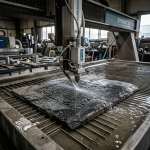
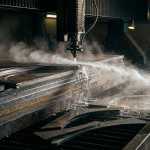
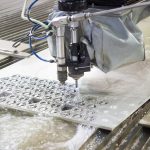
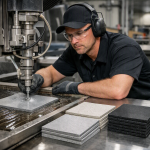
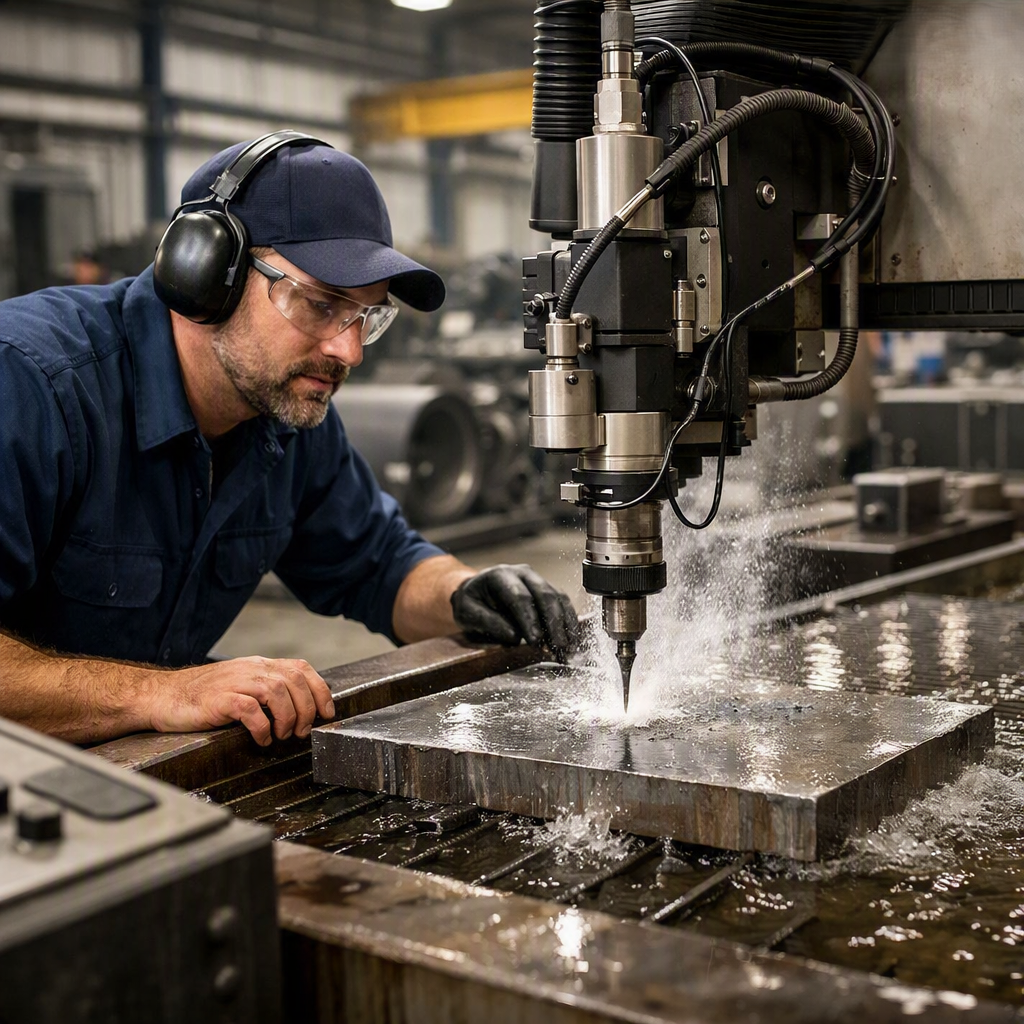

For clean, accurate seals, waterjet custom gasket cutting is a smart choice. The process uses a high-pressure water stream to shape each gasket to your drawing. It cuts cold, so edges stay soft, square, and free of burns or melting.
Waterjet runs from a CAD file, so prototypes, short runs, and design changes move quickly. It handles thick materials and complex profiles with ease. It cleanly cuts rubber, foam, cork, plastics, and other specialty materials.
At Hydro-Lazer, we have offered waterjet cutting from Freeport, Pennsylvania, since 1985. Our 50,000 PSI water stream cuts virtually any material up to 8″ thick. Our CNC and optical equipment holds tolerances as tight as .003″ on certain materials.
Why Gasket Cutting Needs Precision
A gasket works by evenly filling the space between two mating surfaces. Precise cutting keeps that seal tight and consistent. For buyers comparing gasket cutting services, the cutting method plays a large role in seal performance. Good custom gasket cutting starts with accurate dimensions, clean edges, and intact material.
Accurate Dimensions Protect the Seal
Bolt holes, inner diameters, and outer profiles must line up with the flange or housing. A small shift in a bolt hole or inner diameter can create a leak path. Custom gaskets for irregular housings often include tight radii, narrow webs, and closely spaced holes. Each feature requires precision rubber cutting.
Clean Edges Keep Compression Even
Rubber and elastomer gaskets seal by compressing. A cool, clean edge compresses at the same rate as the rest of the gasket. Heat during cutting may char or harden that edge and leave residue behind. A square, cleanly cut edge keeps the full sealing surface working as designed.
Material Properties Stay Intact
Engineers choose gasket materials for specific chemical, temperature, or sanitary properties. For example, FDA-compliant rubber gaskets are used in food manufacturing equipment. A cold cutting method keeps those properties consistent all the way to the edge.
How Waterjet Compares to Die Cutting and Laser for Gaskets
Each cutting method has its own strengths. The right fit depends on volume, material, thickness, and heat sensitivity. Choosing the right process for custom gasket cutting helps you balance cost, speed, and seal quality.
Die Cutting
Die cutting presses a sharp steel rule or machined die through sheet material. It is fast and economical for very high volumes of thin, simple gaskets once the tooling is in place. Each new design calls for a new die, which adds upfront cost and lead time. Thick or dense stock may also dish slightly at the edge under die pressure.
Laser Cutting
Laser cutting is fast and works from a digital file, making it well suited to thin sheet stock. The laser cuts with heat. On rubber and many elastomers, that heat may char, discolor, or harden the edge. Some materials also release fumes during laser cutting, which limits the range of safe materials.
Waterjet Cutting
Waterjet is a cold cutting process. For soft materials like rubber, a pure water stream cuts cleanly, with minimal waste, leaving the material cool and unchanged. Waterjet rubber cutting runs from a CAD file, so design updates happen through a quick program change. This makes our waterjet cutting services a strong fit for prototypes, replacement parts, production runs, and thick gasket stock.
Materials Waterjet Handles Well for Gaskets
Waterjet suits specialty material cutting because it works the same way on every material, regardless of how that material reacts to heat. This versatility makes custom gasket cutting simple across many sealing materials. Here are the most common options.
Rubber and Elastomers
Neoprene, EPDM, nitrile, silicone, and fluoroelastomers are popular sealing materials. Rubber gasket cutting with waterjet keeps edges soft, square, and ready to compress. Our rubber cutting services cover many rubber types and thicknesses.
Foam, Cork, and Fiber Sheet
Closed-cell and open-cell foams work well for cushioning and environmental seals. Cork and cork rubber blends suit low-pressure flange and cover gaskets. Compressed fiber sheet is common in industrial piping and pump applications.
Plastics and Metals
PTFE and polyethylene are popular choices when chemical resistance matters. Precise plastic cutting keeps these parts clean and true to the drawing. Waterjet also cuts metal shims and spacers that pair with gaskets. Abrasive waterjet cutting handles these harder materials with a smooth, accurate finish.
Tips for Soft and Thin Materials
Very soft or very thin materials cut best with proper support to keep them steady. Because waterjet is a wet process, some materials benefit from drying before packaging. Our team reviews your material and thickness before quoting and recommends the best approach.
What to Send for a Custom Gasket Quote
Providing complete details up front leads to a fast, accurate quote for custom gasket cutting. Share the items below with your request. Each one helps our team plan the job with confidence.
- Drawing or design file: A CAD file in DXF, DWG, or another format works best. We also work from hand sketches and digitize them for cutting.
- Material type and grade: List the specific material, such as 1/8 inch EPDM at 60 durometer, or ask us for a recommendation.
- Thickness: Include the sheet thickness and any thickness tolerance.
- Quantity: Share the prototype quantity and expected production volume.
- Critical dimensions: Mark the features that matter most for sealing, such as bolt holes and inner diameters.
- Special requirements: List any FDA, chemical, temperature, or inspection needs. We meet the military inspection standard MIL-I-45208A.
- Material supply: Let us know whether you will supply the material or need us to source it.
- Timeline: Share your required delivery date.
With these details in hand, our team can review your design and send pricing quickly. Send your drawing and specs today to request a quote for gasket cutting. We look forward to helping you seal your next project with confidence.
FAQs
What is custom gasket cutting?
It is the process of shaping gaskets from sheet material to match a customer drawing. Buyers use it for flanges, housings, and assemblies that call for a unique shape. Common methods include waterjet, die cutting, and laser cutting.
Is waterjet good for cutting rubber gaskets?
Yes, waterjet is an excellent fit for rubber gaskets because it cuts cold. Edges stay soft and square, so the gasket compresses evenly and seals as designed. A pure water stream handles rubber, so the job uses water alone.
Does waterjet cutting damage gasket material?
Waterjet is a cold cutting process that keeps gasket material in its original condition. The edge stays free of heat-affected zones, so chemical, temperature, and sanitary properties remain intact. The process also avoids the fumes some materials release under laser cutting.
What is the difference between die cutting and waterjet cutting for gaskets?
Die cutting uses a custom steel die and is cost-effective for very high volumes of thin, simple parts. Waterjet runs from a digital file, so it suits prototypes, short runs, design changes, and thick materials. Many buyers choose waterjet for custom gasket cutting when designs change often, or stock is thick.
Can laser cutting be used for rubber gaskets?
Laser cutting works on some thin rubber sheets. The heat may burn, melt, or discolor the edge, affecting how the gasket compresses. For heat-sensitive elastomers, waterjet offers a clean, cold cut.
What materials can be used for custom gaskets?
Popular choices include rubber, silicone, neoprene, EPDM, nitrile, foam, cork, compressed fiber, and plastics such as PTFE. The right choice depends on temperature, pressure, chemical exposure, and regulatory requirements. A cutting partner can confirm whether a material suits the chosen process.
How thick a gasket can waterjet cut?
Waterjet handles thick gasket stock with ease. Our system cuts virtually any material up to 8″ thick. Practical limits vary by material, so share your thickness needs during quoting.
What file format works best for custom gasket cutting?
CAD files such as DXF or DWG work best because they convert into cutting programs quickly. We also accept hand sketches and digitize them for cutting. Adding material, thickness, quantity, and tolerances to your file speeds up an accurate quote request.