

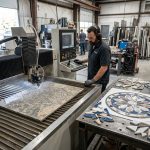
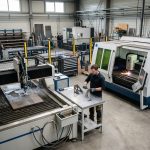
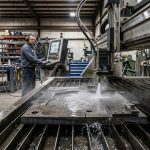
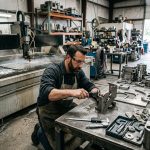
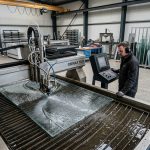


Porcelain tiles waterjet cutting is the answer to one of the most common fabrication problems in premium tile work: how to cut an extremely dense, high-strength material without compromising its surface or edges. Porcelain’s density is its greatest performance asset, and that same property demands a cold, non-contact cutting method to preserve it. Hydro-Lazer, Inc., based in Freeport, Pennsylvania, uses cold-cutting waterjet technology that works with porcelain’s hardness to deliver chip-free results on every grade.
The Higher the Density, the Greater the Cutting Risk
Full-body and technical porcelain grades are specified for high-traffic commercial environments because of their extreme density and strength. That same density concentrates cutting stress at the tile’s surface when mechanical or thermal methods are applied. The higher the grade, the more that cutting stress becomes a fabrication problem.
Mechanical cutting tools strike a dense substrate and generate an impact force that travels along the cut edge as chipping. In standard ceramic, that energy dissipates with minor roughness. In high-density porcelain, it chips the edge cleanly because the dense structure offers no flex.
Thermal cutting methods introduce heat gradients that dense porcelain absorbs poorly. The density that resists wear in service also resists thermal expansion. The result is stress fractures at cut edges and thermal discoloration across the premium surface finish that no installation process can reverse.
Cold-Cutting Technology That Works With Porcelain’s Hardness
The core reversal in porcelain tiles waterjet cutting is this: cold-cutting waterjet works with porcelain’s density, treating it as an advantage. The high-velocity water-and-abrasive stream cuts by erosion, following a precisely programmed path through the tile’s structure. No blade makes contact, and no heat is generated at any stage.
Waterjet cutting utilizes cold water throughout the entire process. Heat-affected zones, thermal fractures, and surface discoloration are all eliminated at the source. The tile’s structure at and adjacent to the cut remains in its original condition.
Porcelain tiles are a perfect match for waterjet cutting because harder, denser materials respond predictably to erosion-based cutting. The cut follows the programmed line cleanly, and the surrounding surface is undisturbed. Every cut piece arrives with its full structural integrity intact.
What Cold-Cutting Preserves in Every Cut Piece
Porcelain tiles waterjet cutting delivers on the specific properties that made premium porcelain the specified material in the first place. Waterjet cutting adds to the natural sheen of porcelain tiles, so the gloss, color depth, and surface texture of a premium grade arrive enhanced at installation. The surface finish that defines the material’s value is preserved through fabrication.
Cutting tolerances as close as ±.003″ are achievable on dense porcelain. Every piece in a large commercial program is cut to the same dimensional specification, which is essential for consistent grout lines, matched patterns, and precise inlay work. The process is fast, flexible, precise, and highly repeatable across all pieces in a program.
Secondary edge finishing is also eliminated. The erosion-based cut produces a clean, finished edge that requires no grinding or post-cut tooling. The tile goes from cut piece to installation-ready without an additional fabrication stage.
When Porcelain Replaces Stone, Only Cold Cutting Preserves the Choice
Porcelain tiles serve as a direct alternative to marble, limestone, granite, terracotta, travertine, and quartzite in high-profile application environments. Corporate lobbies, hospitality buildings, government facilities, and educational institutes all specify porcelain as a stone alternative for its durability, density, and surface consistency. The substitution is a deliberate performance decision.
A cutting method that chips or discolors the porcelain surface eliminates the substitution value. The buyer specified porcelain for its performance properties. Porcelain tiles waterjet cutting honors that specification by preserving every surface property through fabrication.
The same cold-cutting process that handles full-body porcelain handles all compatible stone alternatives, and waterjet is equally appropriate for marble, granite, limestone, travertine, and quartzite. One fabrication method serves the full range of premium materials in a project.
From Logo Floor Designs to Complex Inlays on the Hardest Grades
Material hardness places no ceiling on design ambition when the cutting method is correct. Logo floor designs, portrait inlays, complex geometric patterns, and large-format patterned installations are all achievable in dense porcelain grades. The machine is programmed using standard CAD/CAM systems, and any design submitted as a CAD file or hand sketch translates directly into the cutting program.
Large porcelain jobs are completed in half the time of traditional methods, and the process reduces fabrication time considerably compared to conventional CNC machines. Fast, flexible, precise, and highly repeatable output means commercial-scale programs are delivered on schedule with consistent results across every piece.
Porcelain tiles waterjet cutting at Hydro-Lazer serves educational institutes, corporate office lobbies, commercial malls, government facilities, hospitality buildings, and residential projects. Every design, every grade, every environment.
Request a Porcelain Tile Waterjet Cutting Quote
Hydro-Lazer, Inc. provides porcelain tiles waterjet cutting for all grades, all designs, and all commercial environments, with chip-free results, natural sheen preservation, and tolerances to ±.003″.
Hydro-Lazer, Inc. 134 Armstrong Drive, Freeport, PA 16229 724-295-9100 john@hydro-lazer.com Request a Quote: hydro-lazer.com/rfq/
Compatible materials: porcelain, marble, limestone, granite, terracotta, travertine, quartzite. Environments served: educational institutes, corporate lobbies, commercial malls, government facilities, hospitality buildings, residential
Frequently Asked Questions
Can a waterjet cut hard, dense porcelain tiles without chipping?
Waterjet cutting uses a high-velocity water-and-abrasive stream to erode material along a programmed path, with zero blade contact and zero heat generated. The erosion-based process eliminates the stress propagation that causes chipping in dense porcelain. Every cut edge arrives clean, consistent, and ready for installation.
Why do conventional cutting methods chip dense porcelain tile?
Dense porcelain concentrates cutting stress at the tile surface because its rigid structure has no flex to absorb impact forces. Mechanical blades transmit that impact outward along the cut edge as visible chipping. Thermal methods add heat gradients that the dense material cannot distribute, producing fractures and surface discoloration.
Does waterjet cutting preserve the natural sheen of porcelain tile?
Waterjet cutting adds to the natural sheen of porcelain tiles. The cold-water process introduces no heat and no mechanical abrasion, so the gloss, color depth, and surface texture the tile was manufactured with are fully intact after cutting. The premium surface finish is preserved from fabrication through installation.
What cutting tolerance is achievable on full-body porcelain with waterjet?
Waterjet cutting achieves tolerances as close as ±.003″ on dense porcelain grades. That dimensional precision is consistent across every piece in a program, which matters for large commercial installations requiring matched dimensions, consistent grout lines, or precise inlay fitting.
Is secondary edge grinding required after waterjet cutting porcelain tile?
The erosion-based cut produces a clean, finished edge that requires no secondary tooling or grinding. The tile goes directly from the cut piece to installation-ready. This also eliminates a fabrication stage from the overall project timeline.
Can waterjet cutting handle porcelain used as a stone alternative?
Porcelain tiles used as alternatives to marble, granite, limestone, travertine, and quartzite are cut with full surface integrity preserved. The cold-cutting process honors the substitution value by maintaining every performance property the buyer specified. The same method also cuts the stone materials themselves.
What types of designs can be cut in hard porcelain tile using a waterjet?
Logo floor designs, portrait inlays, complex geometric patterns, custom shapes, and large-format patterned installations are all achievable in dense porcelain grades. Any design submitted as a CAD file or hand sketch goes directly into the cutting program. Material hardness places no ceiling on design complexity with waterjet.
How does waterjet cutting compare to CNC machining for large porcelain projects?
Waterjet cutting reduces process time considerably compared to conventional CNC machines on hard porcelain, with large jobs completed in approximately half the time of traditional methods. The process is fast, flexible, precise, and highly repeatable, making it the efficient choice for commercial-scale porcelain programs.
Where is Hydro-Lazer located, and what areas do they serve?
Hydro-Lazer, Inc. is located at 134 Armstrong Drive, Freeport, PA 16229. They provide porcelain tile waterjet cutting services to commercial specifiers, interior designers, and flooring contractors in Pennsylvania and surrounding regions. Quotes can be requested at hydro-lazer.com/rfq/ or by calling 724-295-9100.