
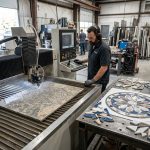
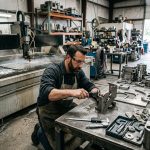
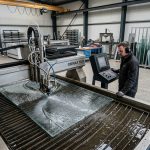
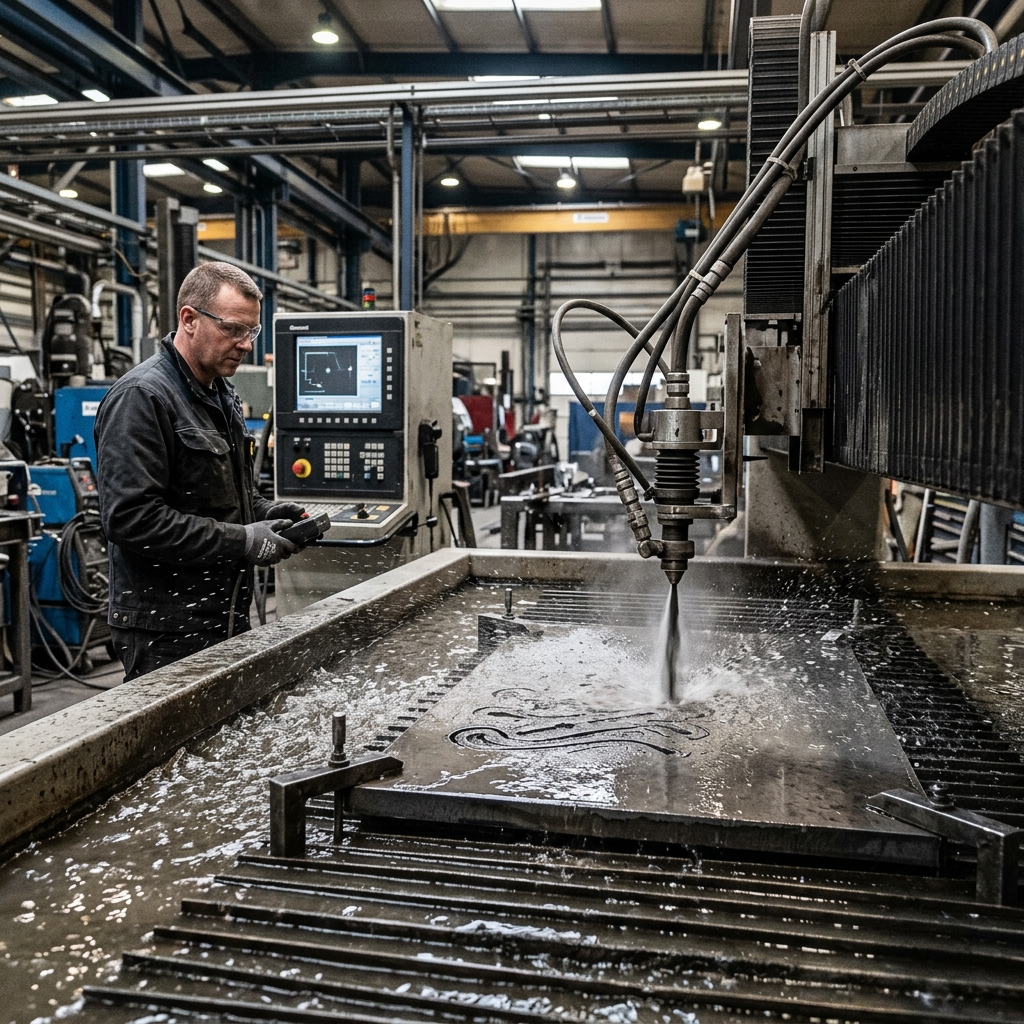

Yes, waterjet cutting steel works well for carbon steel, stainless steel, and hardened tool steel. Abrasive waterjet handles this work as a cold-cutting process, so the edge stays free of a heat-affected zone, burn marks, and hardening. Some buyers call it hydro cutting steel, and it fits jobs where heat control, a clean edge finish, or thick stock matters most.
Our metal cutting team in Freeport, PA reviews each drawing and confirms the best approach for the part. This guide covers practical thickness, edge quality, process choices, and what to send with a quote request. Buyers can use it to plan a steel project with confidence.
Can Waterjet Cut Steel?
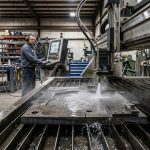
Steel waterjet cutting is a proven process for many metal grades. A high-pressure pump produces a water stream at roughly 40,000 to 55,000 psi, and granular abrasive joins the stream in the cutting head. The abrasive particles erode the steel along a CNC-controlled path, which is the heart of metal waterjet cutting.
Our abrasive waterjet process keeps the part free of blade contact and torch heat, so the workpiece holds its shape. Waterjet cutting steel suits carbon steel, stainless steel, and hardened tool steel, and the same equipment cuts aluminum, titanium, copper, and brass. One vendor can handle every metal component in a mixed material assembly.
For projects involving several material types, our custom waterjet services can support a unified cutting workflow. This can simplify production when steel parts are combined with other metals or specialty materials.
When Waterjet Cutting Steel Makes Sense
Waterjet cutting steel is ideal for electronic enclosures, chassis, brackets, custom panels, tubular frames, and electromechanical assemblies. We serve customers in manufacturing, aerospace, mining, power generation, and agriculture. OEMs and fabrication centers rely on us for steady, accurate parts.
What Steel Thicknesses Are Practical?
Waterjet handles thick metals that plasma and other traditional methods find hard to cut. The process adds zero heat to the part, so thick plate keeps the same metallurgical properties at the edge and at the center. This makes waterjet cutting steel a strong option for heavy stock.
The practical limit for each job depends on steel grade, hardness, edge finish, part geometry, and tolerance needs. Harder tool steels cut at slower speeds, which also creates a smoother edge on thick stock. Tight internal corners and small features require extra care in thick plate to maintain accuracy through the full depth of cut.
Hydro-Lazer has also addressed the relationship between material type, cutting time, and practical thickness in its guide to cutting thickness. These factors help explain why the maximum workable thickness can vary from one project to another.
Maximum thickness varies by job, so a generic number offers limited value. Share your material grade and thickness at the start of the process. Our team confirms feasibility before quoting.
What Edge Quality Can Buyers Expect?
Edge quality is one of the strongest reasons to choose waterjet cutting steel for a project. A properly set up abrasive cut produces a burr-free edge that stays clean and smooth, without burn marks or cracks. Many parts move to the next step with no deburring, saving time and cost downstream.
Plasma and laser melt metal to cut it, which creates a heat-affected zone along the edge. That zone can change hardness, cause brittleness, or leave slag and discoloration that needs cleanup. Cold cutting keeps the metal structure unchanged, which helps parts that will later be welded, machined, tapped, or heat treated.
Our abrasive waterjet capability supports detailed shapes with accuracy within ±0.003″ on CNC-controlled multi-axis machines. Your part tolerance depends on steel grade, thickness, and geometry. Please confirm critical dimensions and any specific edge finish during quoting.
Waterjet vs. Laser/Plasma for Steel
Each cutting method fits different priorities for steel parts. Waterjet suits jobs where heat damage, edge hardening, or distortion would cause problems, as well as thick steel and parts that need a clean edge straight off the machine. Waterjet cutting steel also helps teams skip secondary finishing on many parts.
Laser cutting fits thin steel where a narrow heat-affected zone is acceptable and fast sheet work is the top priority. Plasma suits thick conductive metal plate where some edge cleanup and slag removal are part of the plan. Both thermal methods work well for high-volume jobs with flexible edge requirements.
Hydro-Lazer’s guide to industrial waterjet discusses cold cutting, edge quality, material versatility, and how waterjet compares with conventional thermal cutting methods.
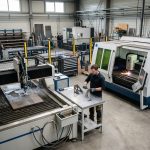
We also offer laser cutting and punching turret services alongside waterjet. This range lets us determine whether waterjet, laser, or punching best fits each part. Buyers get one clear recommendation from a single shop.
What to Include in an RFQ
A complete RFQ leads to a fast, accurate quote with minimal back-and-forth. Start with a drawing or CAD file in DXF, DWG, or PDF format with clear dimensions. List the steel grade, such as A36 carbon steel, 304 or 316 stainless, or a specific tool steel.
Add the material thickness and note whether you will supply the material or need it sourced. Include the quantity for prototypes, production runs, or both, and flag the critical tolerances. Share edge finish needs, downstream processes such as welding or heat treating, and your required delivery date.
Hydro-Lazer also supports projects ranging from prototypes to larger production programs. Its guide to prototype cutting explains how consistent waterjet cutting can support different production stages.
Clear details make waterjet cutting steel quotes quick and accurate. When your drawing and specs are ready, send them through our quote request form. You can also call 724.295.9100 to talk through your steel project.
FAQs
Can a waterjet cut stainless steel?
Yes, abrasive waterjet cuts stainless steel cleanly. The cold process keeps the edge free of discoloration and heat tint. The material’s corrosion resistance stays intact at the cut edge.
Does waterjet cutting create a heat-affected zone in steel?
Waterjet cutting leaves steel free of any heat-affected zone. The process uses high-pressure water and abrasive to cut, so heat stays out of the part. The edge keeps its original hardness and structure with zero thermal distortion.
When should buyers choose waterjet over plasma for steel?
Waterjet cutting steel gives clean, burr-free edges with zero heat effects. It is a strong fit for thick steel where slag or hardened edges would cause trouble. Plasma suits thin, high-volume parts where some edge cleanup is acceptable.
Why is abrasive needed to cut steel with a waterjet?
Pure water works well on soft materials like foam and rubber. Hard metals call for added cutting power, so granular abrasive joins the high-pressure stream. The abrasive particles erode steel quickly and accurately along the programmed path.
Can waterjet cut hardened tool steel?
Yes, waterjet cutting steel includes hardened tool steel, and it is one of the metals we cut. The process adds zero heat, so it keeps the hardness gained from prior heat treatment. Harder steels cut slower, and we build that into the job plan.
How accurate is waterjet cutting on steel?
CNC-controlled abrasive waterjet produces detailed shapes with accuracy within ±0.003″. Tolerance depends on steel thickness, grade, and geometry. Please confirm critical dimensions when you request a quote.
Do steel parts cut by waterjet need deburring?
Most parts move on to the next step with zero deburring. Abrasive waterjet produces burr-free edges that stay clean and free of burn marks. Parts with strict cosmetic edge needs should list them in the RFQ so we can set the cutting speed to match.
What affects the cost of steel waterjet cutting?
Cost depends on material thickness, cut length, part complexity, quantity, and finish needs. Waterjet cutting steel often lowers total cost by eliminating secondary finishing or rework caused by heat. The most reliable way to plan a budget is to request a quote based on your drawing.