

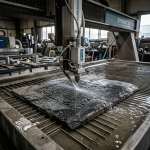
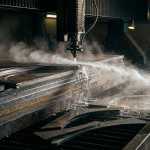
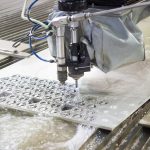
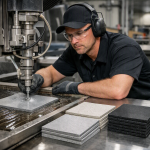
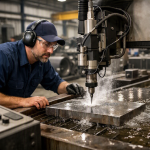


Modern CNC cutting services use computer numerical control to guide a cutting tool along a programmed path. Each part is produced from a digital drawing. The category covers CNC routing, CNC milling, plasma, laser, and waterjet cutting. Waterjet is a CNC-controlled method that cuts cold with a high-pressure stream of water, often mixed with an abrasive.
Cold cutting makes waterjet a strong fit for parts that need a clean edge and stable material properties. It also handles glass, stone, rubber, and thick metal with ease. Most buyers begin with a broad search and choose a process later.
That choice shapes edge quality, tolerances, and cost. This guide explains what computer-controlled cutting covers and how the main methods compare. It also shows where the Hydro-Lazer waterjet cutting process gives buyers an advantage.
What Counts as CNC Cutting?
CNC cutting is any cutting process where a computer controls the tool’s movement. A CAD drawing becomes a toolpath, and the machine follows that path along its axes. Every part matches the first one, from prototype to production run.
CNC refers to the control system. The cutting tool can vary from job to job, and the waterjet process has evolved alongside CNC control for decades. That flexibility is why so many processes fall under CNC manufacturing services.
Three Ways CNC Machines Cut
Mechanical cutting uses routers and mills with a rotating cutter. Thermal cutting uses plasma or laser to melt material along the line. Erosion cutting uses a fast stream of water, often mixed with abrasive, to wear through the material.
All three count as CNC-controlled cutting. Buyers comparing CNC cutting services often find the biggest differences in how each method separates material. That detail decides which jobs suit each process best.
CNC Routing, Milling, Plasma, and Waterjet Compared
Every CNC method has a sweet spot. Material, thickness, heat sensitivity, and edge finish all point toward the best choice. A quick look at each method helps buyers narrow the field before they request quotes for CNC cutting services from several shops.
CNC Routing
Routers use a spinning bit and work fast on wood, plastics, composites, and soft metals. They are common in sign making, cabinetry, and plastics fabrication. Inside corners follow the bit’s radius, so sharp internal corners require another process.
CNC Milling
Mills remove material in layers with a rotating cutter. They excel at pockets, holes, threads, and 3D surfaces. Flat profiles cut from plate suit a profile cutting machine well.
Plasma Cutting
Plasma uses an electrically charged gas arc to cut conductive metals such as carbon steel. It is fast and economical on these materials. The arc introduces heat, which leaves a heat affected zone and an edge that may need finishing. Glass, stone, and rubber call for a different method.
Laser Cutting
A focused beam of light melts or vaporizes sheet metal, some plastics, and wood. Laser delivers fine detail on thin sheet. Heat effects and thickness limits shape where laser cutting fits best.
Waterjet Cutting
A CNC waterjet follows a programmed path like every other CNC machine. It cuts with water pressurized to tens of thousands of PSI. Abrasive waterjet cutting adds a fine abrasive, such as crushed garnet, allowing the stream to cut steel, titanium, and stone. The cut stays cold, so the material keeps its original properties at the edge.
Where Waterjet Has the Advantage
Waterjet suits a wide range of parts, and it stands out in several common situations. Buyers who review CNC cutting services often choose waterjet for the reasons below. Each ties back to the process’s cold, contact-free nature.
Cold Cutting Protects the Material
Thermal processes can harden, warp, or discolor material near the cut. Waterjet is a cold cutting process, so the edge stays free of heat-affected zones. This matters for heat-treated metals, aerospace parts, and parts that will be welded or machined later. That’s why many manufacturers choose industrial waterjet cutting for sensitive parts.
Gentle Cutting With Clean Air
The water stream applies very little force to the part. Thin and brittle materials stay stable through the cut. Plastics and coated metals also avoid burning fumes.
One Process for Many Materials
A single waterjet can cut metal, glass, stone, tile, plastic, rubber, and composites. Projects with mixed materials can stay with one vendor. That keeps scheduling, quality checks, and communication simple.
Precision on Complex Shapes
We use CNC and optical equipment to cut complex shapes and contours within a .003″ tolerance on certain materials. Achievable tolerance depends on material, thickness, and geometry. Each critical tolerance should be confirmed against your drawing.
Flexible Inputs and Quantities
We work from CAD drawings or hand sketches. Offline programming and CAD digitizing software turn each design into a toolpath. Since 1985, we have handled single prototypes and large production runs alike. We also meet military inspection standard MIL-I-45208A.
Materials and Thickness Waterjet Handles Well
Material range is one of the clearest reasons buyers choose waterjet over other CNC cutting services. One machine moves from steel to stone to rubber with a simple setup change. Here is how each material group performs.
Metals
Abrasive waterjet cuts steel, stainless steel, aluminum, brass, copper, and titanium well. Heat-sensitive alloys keep their properties because the cut stays cold. Edges usually need little cleanup. Our metal cutting work covers both prototype and production quantities.
Glass, Stone, and Tile
Waterjet cuts glass, marble, granite, porcelain, and ceramic tile into detailed shapes. These brittle materials, along with technical ceramics, stay intact under the steady water stream. We use this capability for precision flooring inlays and medallions.
Plastics, Rubber, and Composites
Plastics keep a crisp, clean edge when cut cold. Rubber and gasket materials hold their shape. Layered composites stay bonded along the cut line.
Thickness and Size
Our system produces a 50,000 PSI stream using a WSI 50 HP pump. It can cut virtually any material up to 8″ thick. Production capability extends to sizes up to 9 ft x 12 ft. Thicker material cuts more slowly and can show more edge taper, which affects cycle time and cost.
What to Include in Your RFQ
A complete request helps any CNC cutting service provider return an accurate price and lead time quickly. Clear details also reduce back-and-forth emails. Include the items below with every request.
- Drawing or File: A DXF, DWG, or other CAD file works best. A dimensioned sketch also works well.
- Material Type and Grade: List the exact alloy or material, such as 304 stainless, 6061 aluminum, tempered or annealed glass, or a specific stone or tile.
- Material Thickness: State the nominal thickness and units.
- Quantity: List the prototype count, initial run, and expected annual volume.
- Tolerance Requirements: Call out only the truly critical dimensions so the cut stays properly specified.
- Edge Finish: State whether edges will be visible, welded, or machined after cutting.
- Material Supply: Say who will provide the stock.
- Secondary Operations: List any deburring, drilling, tapping, or assembly.
- Delivery Date and Location: Include firm deadlines and the ship-to address.
Some buyers are still choosing a cutting method when they send a request. Mention that in the request. A waterjet shop can review the drawing and confirm the best process for the part.
FAQs
What does CNC cutting include?
CNC cutting covers any process where a computer guides the cutting tool along a programmed path. Common CNC cutting services include routing, milling, plasma, laser, and waterjet cutting. The best method depends on material, thickness, tolerance, and edge quality.
Is waterjet cutting considered CNC cutting?
Yes, waterjet cutting is a CNC-controlled process. A computer guides a high-pressure stream of water, often mixed with abrasive, along the toolpath. This makes it a cold-cutting CNC method.
What is the difference between CNC waterjet and CNC plasma cutting?
Plasma uses an electrically charged gas arc that melts conductive metals and leaves a heat-affected zone. Waterjet cuts cold with high-pressure water and abrasive, so the edge keeps its original properties. Waterjet also cuts glass, stone, and rubber, which suit a nonthermal process.
What materials can CNC waterjet cutting handle?
Waterjet cuts nearly any material, including steel, aluminum, titanium, glass, stone, porcelain tile, plastics, rubber, and composites. Hard materials require an abrasive waterjet, while softer materials can be cut with water alone. We can cut virtually any material up to 8″ thick, whether the job is one prototype or a full production run.
How accurate is CNC waterjet cutting?
Accuracy depends on material, thickness, and part geometry. We cut complex shapes and contours within a .003″ tolerance on certain materials. Critical tolerances should always be confirmed against your specific drawing.
When is waterjet the best choice over laser or plasma?
Waterjet fits best when heat would damage or distort the part. It also suits nonmetal materials and thick stock that exceeds laser capacity. Plasma or laser can be a fast, economical pick for thin conductive sheet metal where some heat effects are acceptable.
How much does CNC cutting cost?
Cost depends on material, thickness, total cut length, tolerance, setup, and quantity. Harder and thicker materials take longer to cut, which raises the price. The most accurate pricing for CNC cutting services comes from a drawing-based quote request.
What file format works best for a CNC cutting quote?
DXF and DWG files are the most common formats for CNC cutting quotes. Many shops also accept PDFs or dimensioned hand sketches. We use CAD digitizing software to turn sketches into cut-ready programs.