

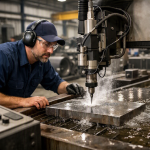


Industrial cutting services shape plate, sheet, and block material into accurate parts at production scale. The best process depends on the material, its thickness, the tolerance, the volume, and how the part handles heat. Laser, plasma, and EDM each suit specific jobs. For heavy-duty work with mixed materials and a need for clean, cool edges, waterjet cutting is often the most flexible choice.
The right process shows its value later in the job. It keeps parts flat, edges clean, and batches on schedule. This guide covers what industrial work involves, which factors matter most, and how to prepare a strong quote request.
We have provided precision waterjet cutting from Freeport, Pennsylvania since 1985. Our customers range from small prototype shops to manufacturers with large yearly contracts. That experience shapes every tip below.
What “Industrial Cutting” Covers
Industrial cutting is any process that shapes material for manufacturing. It sits at the start of most industrial fabrication workflows. Parts get cut first, then move on to machining, forming, welding, or assembly. Every later step depends on the accuracy of that first cut.
Good industrial cutting services focus on three needs. Each one shapes the right process and the final price.
Volume: Production runs, repeat orders, and bulk material cutting call for the same quality from the first part to the last.
Thickness: Heavy-duty cutting services often handle thick plate, dense stone, or stacked sheets.
Tolerance: Parts that go into assemblies need to fit, so accuracy and repeatability matter.
Common Processes Used for Industrial Cutting
Most manufacturing cutting services use one or more of these four methods. Each one has a clear place in production work.
| Process | How It Cuts | Best Fit |
| Laser | Focused heat beam | Thin to medium metal sheet and fine detail |
| Plasma | Ionized gas arc | Fast cuts in thick conductive metals |
| EDM | Electrical sparks | Very fine detail in conductive metals |
| Waterjet | High-pressure water, often with abrasive | Thick stock, mixed materials, and heat-sensitive parts |
Each process shines on certain parts, and a side-by-side laser comparison shows where each one fits. The smart move is to match the process to the part first. Then pick a vendor that runs that process well.
Key Factors for High-Volume and Heavy-Duty Jobs
Define what the job needs before comparing vendors. These factors guide both process choice and price. Clear answers here help industrial cutting services providers quote quickly and accurately.
Material Type and Mix
Some production lines cut one alloy all year. Others cut metal, rubber gaskets, plastic guards, and glass panels for one assembly. Using the same equipment for every material keeps sourcing simple. It also keeps tolerances consistent across all parts.
Thickness
Thickness shapes cut speed, edge quality, and which processes fit the job. Heavy plate and thick nonmetals call for a process that stays cool through the full depth. Ask each vendor for its practical limit on your specific material.
Tolerance and Repeatability
Ask whether a vendor holds tolerance across a full run. A strong first article is a good start, and steady results on part 500 matter too. Tolerances change with material and thickness, so a trusted vendor will review your part and give a clear answer.
Heat Sensitivity
Heat can harden metal edges, warp thin sections, melt plastics, and crack glass or stone. Parts headed for welding, machining, or demanding use need edges that keep their original properties. A cool cutting process protects that quality from the start.
Volume, Part Size, and Nesting
High volumes reward smart nesting, which means arranging parts on the sheet to save material. Large parts need a machine bed big enough to hold them. Both factors shape material cost, which often makes up the largest share of the total price. Good planning here boosts manufacturing efficiency across every run.
Secondary Operations
Count the steps that come after cutting. A clean, stress-free edge can remove the need for deburring, grinding, or extra machining. Those savings often matter most to total part cost.
Why Waterjet Suits Industrial Production Runs
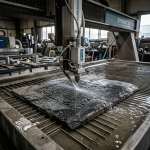
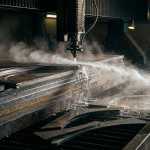
Waterjet cutting uses an ultra-high-pressure stream of water, often mixed with fine abrasive, to cut along a programmed path. Many manufacturers now move to industrial waterjet systems because the process stays cool from start to finish. That cool cut is why so many buyers of industrial cutting services choose waterjet for demanding production work.
Clean, cool edges: Material at the edge keeps the same properties as the rest of the part. This matters for parts headed for welding or machining.
Gentle on materials: The process stays fume-free and easy on the part. Thin sections, brittle stone, and plastics stay intact.
One process for many materials: The same equipment handles metals, glass, stone, rubber, plastics, and composites. Mixed material jobs stay consistent from part to part.
Thick material capability: Our systems use a 50,000 PSI stream from a WSI 50 HP pump to cut material up to 8 inches thick.
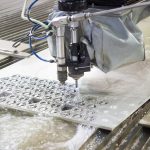
Precise complex shapes: CNC and optical equipment cut complex shapes and contours within a .003″ tolerance on certain materials.
Flexible design inputs: We work from CAD drawings or hand sketches using offline programming and CAD digitizing software.
Abrasive cutting for hard materials: We add crushed garnet to the stream to cut harder materials and leave a smooth finished edge.
We meet military inspection standard MIL-I-45208A. Our customers work in aerospace, military, industrial, and architectural fields. Our full range of waterjet cutting supports prototypes and recurring contract runs. The same process can follow a part from first sample into full production.
Materials Commonly Cut at Industrial Scale
The range of materials is one of waterjet’s biggest strengths in industrial cutting services. These material groups show up most often in production work. Each one benefits from a cool, precise cut.
Metals
Carbon steel, stainless steel, and aluminum are the most common industrial materials. A cool cut keeps edges flat and workable, ready for welding or machining. Buyers sourcing plates, brackets, or machine parts can explore our metal cutting options for steel and other alloys.
Glass, Stone, and Ceramics
Brittle materials respond best to a gentle, stress-free process. Waterjet shapes glass, granite, marble, porcelain, and ceramic into precise parts. These pieces serve as architectural panels, equipment parts, and decorative work. Our ceramic cutting work also supports technical and medical components.
Plastics and Rubber
Plastics and rubber keep clean, smooth edges under a waterjet. The process cuts gaskets, seals, guards, and polymer parts with crisp results. That makes it a strong fit for high-volume gasket and seal production.
Composites and Layered Materials
Composites and laminates hold together well under a cool cut. Each layer stays bonded and intact right to the edge. This keeps layered parts strong and ready for assembly.
What to Prepare Before Requesting a Quote
A complete request leads to faster pricing and fewer emails. Gather these details before contacting any industrial cutting services provider. Each item helps the vendor price your job on the first pass.
Drawings or files: CAD files such as DXF or DWG work best, and dimensioned hand sketches work for many jobs.
Material details: Note the type and grade, plus who will supply the material.
Thickness: List the thickness for each part, since it affects speed and cost.
Quantities: Share the prototype quantity, first run size, and expected yearly volume.
Tolerances: Mark critical dimensions and the tolerance each one needs.
Edge finish: Flag surfaces that need a specific finish or must stay free of heat effects.
Part size: Give overall dimensions, especially for large parts.
Schedule: Share target delivery dates and note one-time or repeat orders.
Quality needs: List inspection standards, certifications, or reports your customers require.
With these details ready, we can review your parts and recommend the right cutting approach. Send your drawings and requirements to request an industrial cutting quote. Our team will follow up with clear pricing for your job.
FAQs
What does industrial cutting include?
Industrial cutting services turn raw plate, sheet, and block stock into finished parts for manufacturing. Most of this work runs at production volume. Common processes include laser, plasma, EDM, and waterjet cutting, each matched to specific materials.
Which cutting process works best for heavy-duty manufacturing?
The best process depends on the part. Plasma suits thick conductive metals, laser suits thin-to-medium sheet, and EDM handles fine detail. Waterjet shines on thick or mixed materials that need cool, clean edges, and abrasive waterjet adds cutting power for hard stock.
How thick can industrial waterjet cutting go?
Practical thickness depends on the material and the edge quality you need. Our high-pressure systems cut material up to 8 inches thick. Thicker cuts take longer, so thickness plays a big part in cost.
Does waterjet cutting create a heat-affected zone?
Waterjet is a cold cutting process, so edges stay free of heat effects. Parts keep their original hardness and shape after cutting. This makes waterjet a smart choice for parts headed for welding, machining, or heat-sensitive use.
Can one vendor cut multiple materials for the same project?
Yes, a waterjet vendor can handle mixed materials on one machine. Metal, glass, stone, rubber, plastic, and composites all run on the same equipment. This keeps sourcing simple and tolerances consistent across every part.
Is waterjet cutting a good fit for high-volume production?
Yes, it works well for large runs. CNC control repeats the same programmed path for every part, which keeps results consistent. Smart nesting also saves material on bulk orders.
What information goes into a cutting quote?
Start with drawings or CAD files, material type, and thickness. Add quantities, tolerances, and your delivery schedule. Our quote request form collects these details so your job gets accurate pricing.
How should buyers choose the right cutting vendor?
Start by comparing the processes, thickness limits, and part size limits each vendor offers. Ask how they hold tolerance across a full run, and check whether they have experience with your materials. The best industrial cutting services partner recommends a process based on your part and its end use.
Do industrial cutting vendors work from hand sketches?
Many vendors accept hand sketches along with CAD files. We convert sketches into cutting paths using offline programming and CAD digitizing software. Clear dimensions on the sketch help keep the final parts accurate..