

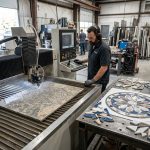
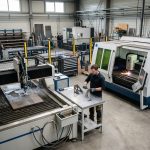
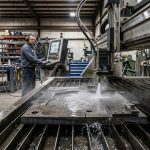
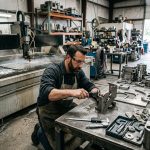
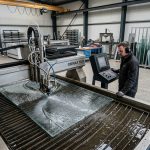
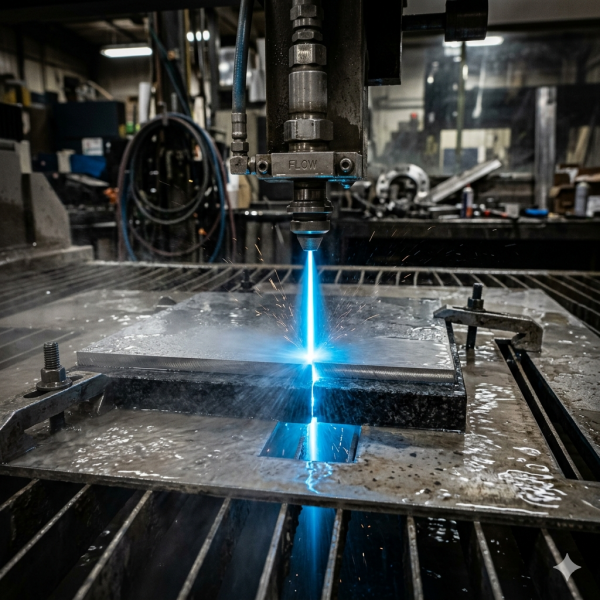

Choosing the right cutting solution impacts both precision and material efficiency. Water jet cutting services achieve sharp, precise edges while conserving raw materials during production. This method is highly versatile, working across metals, composites, and other industrial surfaces. Machines are programmed to maintain consistent performance on every part. Each project is completed with attention to detail, ensuring high-quality outcomes.
This technology supports industries in producing accurate and polished components. Cuts are executed with control and uniformity, enhancing productivity at every stage. The process allows intricate designs to be handled smoothly and efficiently. Teams experience improved workflow as materials are used effectively and precisely. The result is a seamless combination of accuracy and operational efficiency for diverse applications.
Why Traditional Cutting Methods Increase Finishing Work
Plasma, laser, and EDM methods create edges that require additional finishing due to inherent thermal or mechanical effects. Heat-based cutting introduces heat-affected zones (HAZs) that alter material hardness, grain structure, and dimensions. This leads to deburring, grinding, or other secondary finishing steps, increasing labor and cycle time.
Thermal Effects on Complex Shapes
Simple straight cuts handle minor heat effects, but curves, tight radii, and multi-directional patterns require careful management of heat distribution. Slower movements along curved paths can lead to distortion and edge imperfections. Laser or plasma cutting of intricate geometries may require rework to maintain precision. Mechanical methods like EDM avoid heat-affected zones but introduce micro-deformations that need finishing for accurate assemblies.
Hidden Compliance and Safety Costs
Thermal cutting processes produce fumes and byproducts that require ventilation, personal protective equipment, and adherence to safety regulations. These considerations contribute to operational costs that may not appear in per-part pricing. Over time, facilities benefit from accounting for these safety measures in their budget planning. Maintaining compliance ensures a safe and efficient production environment.
The goal is straightforward: a cutting process that delivers ready-to-use edges without secondary finishing.
Cold Cutting: First-Pass Finishing with Waterjet
Waterjet cutting eliminates thermal issues by using a high-pressure water stream at 50,000 PSI. The cut occurs without heat transfer, avoiding HAZs, fumes, and thermal distortion. Material edges remain as strong and accurate as the bulk material.
Precision and Performance in Cold Cutting
Hydro-Lazer’s water jet cutting service uses abrasive waterjet technology. Adding granular abrasives allows cutting of harder materials while preserving clean edges. CNC-controlled multi-axis machines consistently handle intricate shapes and tight radii.
Key performance metrics include:
- Cutting tolerances as precise as ±0.003 inches
- Burr-free edges on the first pass
- Zero contact between the cutting mechanism and the material
- 5 to 10 times faster throughput than EDM for similar tolerance parts
These capabilities reduce labor costs, eliminate secondary finishing, and streamline production workflows.
Material Efficiency Through Narrow Kerf and Precision Nesting
Material waste can impact budgets significantly at the production scale. Traditional thermal methods require extra spacing to prevent HAZ effects, leaving unused stock.
How Waterjet Maximizes Sheet Yield
Waterjet’s narrow kerf allows tighter part nesting. This increases usable material per sheet and lowers cost per unit. It enhances efficiency through:
- CAD and offline programming for optimized cut paths
- Sheet capacity up to 9 ft × 12 ft for large-format parts
- Cutting capability up to 8 inches thick across metals, composites, plastics, and stone
This approach increases raw material efficiency without altering production methods or requiring additional calibration runs.
One Service for a Wide Range of Industrial Materials
Managing multiple vendors and material types adds coordination and quality overhead. It supports diverse materials in a single workflow:
- Metals: aluminum, brass, steel, copper, and alloys
- Composites and ceramics
- Plastics: nylon, PVC, PET, acrylic, and polymer sheets
- Rubber, foam, elastomers
- Natural stone: marble, granite
- Glass, wood, specialty materials
Cutting parameters are adapted per material without retooling. Switching from metals to polymers in the same production run is seamless, saving time and reducing risk. Applications span manufacturing, automotive, aerospace, medical, and semiconductor industries.
Cutting Quality as a Cost Advantage
Clean edges and minimal material waste directly impact production economics. Benefits of using a high-precision water jet cutting service include:
- Reduced per-part labor due to the elimination of secondary finishing
- Lower raw material costs through improved yield
- Fewer inspection failures thanks to consistent ±0.003-inch tolerances
- Cost-effective solution suitable for both prototypes and large-scale production
By integrating precision cutting into the workflow, operations achieve measurable savings and improved throughput.
Partnering with Hydro-Lazer for Industrial Cutting
Since 1985, Hydro-Lazer has delivered water-jet cutting services to clients across metals, composites, plastics, stone, and specialty materials. Production-scale experience ensures projects meet deadlines, budget targets, and quality standards.
For operations concerned with secondary finishing, scrap reduction, or material efficiency, submitting material specifications and production requirements through the RFQ page at Hydro-Lazer.com provides a straightforward comparison with existing methods.