

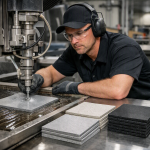
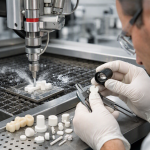
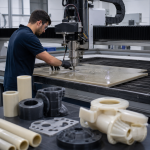
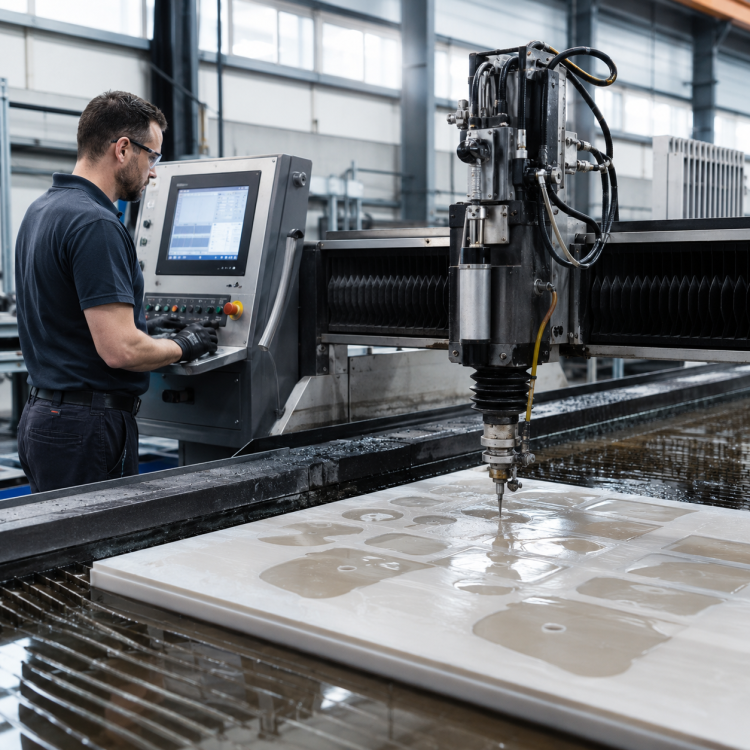

Plastic cutting services at production scale demand a method that eliminates failure at the source, where every defect becomes a cost problem. Hydro-Lazer, Inc. in Freeport, Pennsylvania, provides waterjet cutting for manufacturing, automotive, and construction industries, delivering clean cuts without burrs, distortion, heat-affected zones, or fumes across any material, quantity, or shape.
What Causes Delamination in Plastic Cutting and Which Methods Are Responsible?
Delamination is one of the most costly failure modes in the production of polymer components. It originates from the cutting method itself.
In layered, composite, and multi-layer plastic materials, the bond between layers is what holds the part together. When heat or mechanical stress enters during cutting, that bond separates. The part becomes unusable.
Thermal cutting methods,s such as laser and plasma, may generate heat that degrades adhesive and bonding layers in composite plastics. Even when a cut edge looks clean, the bonding chemistry near the interface can already be compromised. Mechanical cutting methods apply a contact force that causes layer separation on composite laminates, especially at corners and cut endpoints.
The consequence is consistent across facilities: delaminated parts fail inspection, become scrap, and require replacement cuts. Material cost and production time both increase in the same order of magnitude.
Waterjet cutting removes both conditions at the process level. No heat enters the cut zone. No contact force is applied to the laminate structure. Hydro-Lazer’s waterjet process produces clean cuts without burrs or distortion, preserving the material’s physical and chemical properties throughout.
What Plastic Materials Can Hydro-Lazer Cut With Waterjet Technology?
Material compatibility is the first practical question any procurement manager asks when evaluating a vendor. A vendor’s polymer range determines whether they can meet a facility’s full production requirements.
Hydro-Lazer’s waterjet process covers fourteen plastic material types:
- Nylon – is an engineering plastic used in mechanical components and industrial parts. Waterjet cutting nylon does not melt or deform the substrate.
- Acrylic – both optical-grade and structural- is cut cleanly without crazing or chipping.
- Thermoplastics – are a broad family of heat-sensitive polymers where cold cutting is essential to preserve material integrity.
- Thermosets – are rigid, cross-linked polymers that cannot be remelted. Waterjet cuts them without introducing heat that would stress the cured matrix.
- Biodegradable plastics – have sensitive material structures that are preserved through the cold cutting process.
- Elastomers – are flexible polymers that require clean cuts without deformation.
- Epoxy resins – are structural composite materials where delamination risk is highest with conventional methods.
- Expandable polystyrene (EPS) – is a low-density foam plastic that can be cut without compression or crumbling.
- Fluoropolymers – are chemically resistant polymers where surface integrity is critical, with zero heat-affected zones produced.
- Polyolefins (PO) – are commodity plastics used at high production volumes, handled economically and accurately.
- Polystyrene (PS) – is a brittle material that fractures under mechanical stress. Cold waterjet cutting eliminates that risk.
- Polyurethane (PUR) – is available in flexible and rigid variants, both within documented capability.
- Polyethylene Terephthalate (PET) is used in oil and gas and industrial applications; it cuts cleanly without fumes.
- Polyvinyl Chloride (PVC) – generates toxic fumes under thermal cutting. Waterjet produces zero fumes during the process.
Why Do Heat-Affected Zones and Fumes Make Conventional Plastic Cutting Expensive at Scale?
Heat-affected zones and fumes are operational cost multipliers in plastic cutting. At the production scale, they affect every part, every shift, and every compliance audit.
A heat-affected zone alters the physical and chemical properties of plastic near the cut edge. A part whose edge properties fall outside the material specification is scrap, with no secondary operation capable of reversing that damage. At a rate of 1 affected part per 100, a production run of 50,000 units yields 500 failed parts. That is a material budget line item.
Fumes from thermal plastic cutting, particularly from PVC, require facility ventilation systems and air handling infrastructure. That infrastructure incurs capital, maintenance, and compliance audit costs.
Hydro-Lazer’s waterjet cutting process produces no heat-affected zones or fumes. The substrate’s physical and chemical properties are preserved at the cut edge. Parts meet the specification on the first cut. Facilities using Hydro-Lazer’s process incur none of the overhead associated with air-handling infrastructure.
How Does Waterjet Cutting Eliminate Rework in Plastic Component Production?
Rework in plastic cutting is a downstream symptom of an upstream process problem. Waterjet eliminates the process conditions that generate it.
- Clean cuts without burrs. Waterjet produces cut edges that require zero post-cut deburring. Parts advance to the next production stage without an intermediate finishing step.
- Dimensional accuracy within ±.003″. Cutting tolerances of ±.003″ on certain materials mean parts arrive within specification, ready for the next stage.
- Material-specific cutting speed. The right cutting speed is applied to each plastic material to produce neat cuts that preserve physical and chemical properties. This is documented material-specific expertise, applied per substrate type.
- Zero mechanical contact at the cut surface. There is no contact force applied to part geometry, no tool deflection, and no contact-induced stress at edges or corners.
- Intricate geometry without wastage. Waterjet cutting produces intricate shapes with high accuracy and flexibility, reducing material waste on high-value polymer stock.
What Production Industries Use Waterjet Plastic Cutting Services?
Waterjet plastic-cutting services serve a wide range of production industries, with applications as varied as the polymer materials they process.
Oil and Gas Pipelines
Use plastics as key raw materials. Waterjet cutting these materials to the desired shapes, lengths, and dimensions meets production specifications.
Marine Pump Manufacturing Centers
They require plastic components cut to precise production requirements, where dimensional variance is unacceptable.
Automotive Manufacturing
It is a documented client sector for Hydro-Lazer. Plastic component cutting for automotive production operates at high volume with tight tolerance requirements.
Construction Industry
Component manufacturers using plastic materials are a documented client industry for Hydro-Lazer’s Cutting Services.
Manufacturing Broadly
It encompasses any facility that requires plastics to be cut to desired shapes, lengths, and dimensions for product manufacturing.
Hydro-Lazer serves customers from the manufacturing, automotive, oil and gas, and construction industries, with production capability to match both specialty orders and ongoing contract runs.
Can Waterjet Handle Small Orders and Large Production Contract Runs for Plastic Parts?
One practical concern for facilities evaluating a new vendor is whether that vendor can scale with their production program or only handle one-off specialty orders.
Hydro-Lazer’s documented production capability covers any quantity. Both small and large-scale industries are within scope. A facility can bring prototype quantities through the same vendor relationship it uses for full-production contract runs, eliminating the cost of requalifying a vendor between the development and production phases.
Design input requirements are minimal. Hydro-Lazer accepts both hand sketches and CAD drawings. No proprietary file format or special preparation is required to start a production program. Competitive pricing makes waterjet viable for ongoing production contracts across any scale.
How Do Facilities Get Started With Hydro-Lazer’s Plastic Cutting Services?
Getting a quote for plastic cutting services from Hydro-Lazer requires only a material specification and a design input, such as a hand sketch or CAD drawing.
Submit an RFQ at hydro-lazer.com/rfq/ or contact the team directly by phone or email. Hydro-Lazer will respond with pricing for the specified material, quantity, and geometry. Output from the first run is production-ready: clean cuts, zero heat-affected zones, zero fumes, and dimensional accuracy within documented tolerances.
Hydro-Lazer, Inc. 134 Armstrong Drive, Freeport, PA 16229 Phone: 724-295-9100 Email: john@hydro-lazer.com RFQ: hydro-lazer.com/rfq/
Serving manufacturing, automotive, oil and gas, and construction industries. Production capability for any quantity, from prototypes to large, annual contract runs.
Frequently Asked Questions
Why does plastic delaminate when cutting?
Delamination occurs in layered and composite plastic materials when heat or mechanical stress is introduced during cutting. The bonding between layers separates under those conditions, rendering the part unusable. Waterjet cutting removes both causes by introducing zero heat and zero direct contact force to the laminate structure.
What is the best way to cut plastic without heat damage?
Waterjet cutting produces zero heat-affected zones in plastic materials. Unlike laser or plasma cutting, waterjet uses a high-pressure water stream that generates no heat at the cut interface. The physical and chemical properties of the plastic substrate are preserved at the cut edge.
Can a waterjet cut PVC without producing fumes?
Yes. PVC generates toxic fumes during thermal cutting because it degrades at high temperatures, releasing hydrogen chloride gas. Waterjet introduces zero heat to the PVC substrate, so zero fumes are produced. This removes the need for air-handling and ventilation infrastructure associated with thermal PVC cutting.
What tolerances can waterjet achieve on plastic parts?
Waterjet cutting achieves tolerances within ±.003″ on certain plastic materials. Parts arrive cut to specification and advance to the next production stage without requiring secondary sizing or adjustment operations.
Can a waterjet cut nylon and other engineering plastics?
Yes. Nylon and other engineering plastics are within documented waterjet cutting capability. Waterjet cutting nylon does not melt or deform the substrate, a critical distinction from thermal methods that soften or distort nylon at the cut zone.
What plastic materials are compatible with waterjet cutting?
Documented compatible plastics include nylon, acrylic, thermoplastics, thermosets, biodegradable plastics, elastomers, epoxy resins, expandable polystyrene (EPS), fluoropolymers, polyolefins (PO), polystyrene (PS), polyurethane (PUR), polyethylene terephthalate (PET), and polyvinyl chloride (PVC).
How does waterjet cutting eliminate rework in plastic production?
Waterjet produces clean cuts without burrs, achieves tolerances of ±.003″ on certain materials, and requires zero secondary finishing steps. The process eliminates the upstream conditions that generate rework downstream, including burrs, distortion, heat-affected zones, and dimensional inaccuracy.
Does waterjet plastic cutting work for high-volume production runs?
Yes. Waterjet plastic-cutting services are available for any quantity, from prototypes to large, yearly contract runs. Competitive pricing makes the process viable for ongoing production contracts at any scale.
What industries use plastic cutting services for manufacturing?
Oil and gas pipeline facilities, marine pump manufacturing centers, automotive parts suppliers, and construction component manufacturers are among the documented industries served. Any facility requiring plastics cut to desired shapes, lengths, and dimensions for product manufacturing falls within the scope.
How do facilities get a quote for plastic cutting services?
Submit a material specification and design input, either a hand sketch or a CAD drawing, through the RFQ page at hydro-lazer.com/rfq/ or by calling 724-295-9100. Hydro-Lazer, Inc. is located at 134 Armstrong Drive, Freeport, PA 16229.