

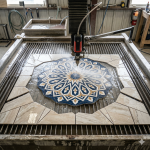
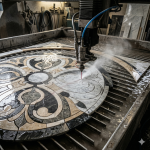
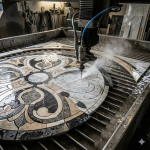
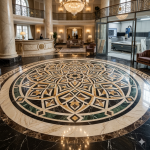
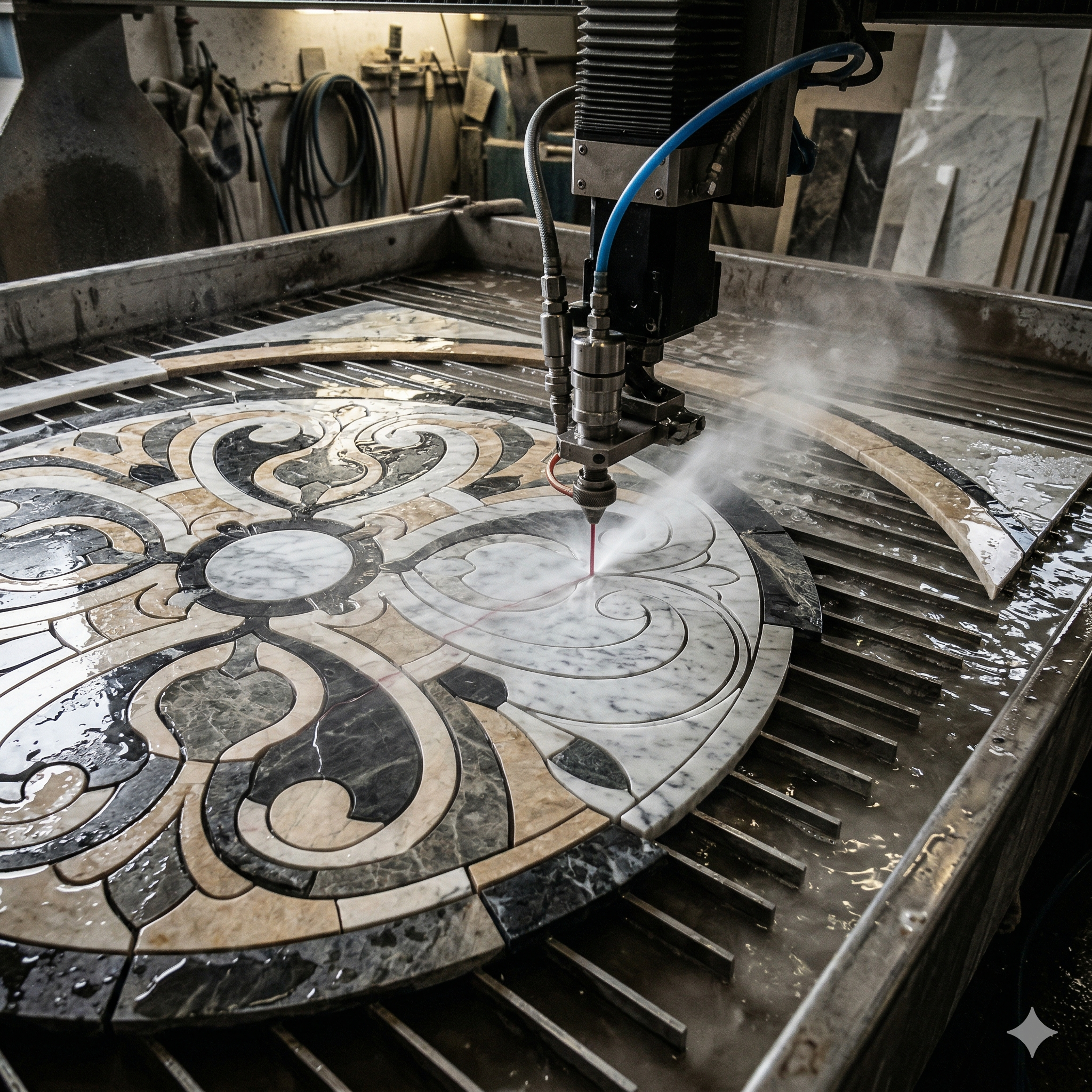

Architects and builders often select porcelain tile for its density, durability, and refined finish. Floors, walls, and decorative features are enhanced by their smooth, polished surfaces. Detailed patterns and elegant layouts are often incorporated into modern interior design. Through waterjet cutting of porcelain tiles, intricate shapes are formed with precise accuracy while the tile’s strength is preserved. Clean edges and smooth surfaces remain consistent throughout the fabrication process.
Complex design elements are welcomed in both residential and commercial installations. Curves, medallions, and geometric layouts can be produced with controlled precision. The cold cutting process protects the surface finish and supports accurate detailing. Each tile piece fits seamlessly within the overall pattern and contributes to a polished visual flow. The completed installation reflects durability, careful craftsmanship, and refined architectural design.
Why Porcelain Tile Is Difficult to Cut
The structural composition of porcelain tiles defines their performance. High density provides reliable protection against scratches, moisture, and frequent foot traffic. Fabrication processes demand careful handling due to the material’s compact structure. Precision cutting becomes essential during shaping and finishing.
Traditional fabrication tools operate through mechanical contact with the tile surface. Diamond blades and rotary equipment press against the material while guiding the cut. Pressure gathers at the point where the blade meets the tile. Concentrated stress within the structure can lead to fracture lines during complex shaping.
Key Challenges With Conventional Tile Cutting
Common fabrication problems include:
- Crack formation during cutting
- Edge chipping along curves
- Uneven contours on decorative shapes
- Surface damage caused by friction or heat
These issues increase material waste and installation delays.
How Waterjet Cutting Works for Porcelain Tiles
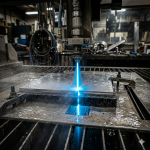
Advanced waterjet technology uses a high-pressure stream of water mixed with abrasive material to achieve clean cuts in porcelain. CNC systems control the movement of the cutting head, allowing it to follow detailed patterns and intricate contours. The absence of mechanical contact protects the tile from stress fractures and surface damage. Operators achieve precise, smooth results without affecting the material’s structural integrity.
The precision of waterjet cutting makes it ideal for complex designs and delicate applications. Each tile receives accurate shaping along curves and corners without the risk of chipping. The controlled process produces uniform finishes and consistent quality across multiple pieces. This technology ensures both efficiency and reliability in production environments.
Benefits of Waterjet Cutting for Porcelain
Key advantages include:
- No mechanical stress on the tile
- Clean edges with minimal chipping
- Precision tolerances near ±.003 inches on certain materials
- Accurate reproduction of complex shapes
- Smooth edge quality ready for installation
Waterjet cutting supports both artistic designs and functional architectural applications.
Why Intricate Tile Designs Require Waterjet Technology
Modern tile installations feature decorative inlays and intricate geometric patterns. These designs showcase elegant curves and detailed contours. Traditional mechanical tools struggle with these shapes because their blades have fixed geometries.
As the cutting path changes direction, pressure along the tile edge shifts, creating opportunities for slight imperfections.
Effects of Edge Chipping on Tile Inlays
Small chips may appear minor during fabrication. During installation, they create visible problems.
Common installation issues include:
- Inconsistent gaps between tiles
- Irregular joint alignment
- Visible edge damage in decorative patterns
- Poor fit between adjacent inlay pieces
Precision patterns require consistent edge quality.
Heat Damage in Thermal Cutting Methods
Laser and plasma cutting use heat to penetrate materials. Porcelain tiles feature a delicate surface glaze that responds sensitively to temperature. Heat along the cut line can subtly change the glaze, resulting in color variations.
These changes may be imperceptible during fabrication, but under lighting after installation, the tile’s true beauty is revealed.
Risks of Heat Affected Zones
Thermal cutting can create:
- Discolouration along cut edges
- Surface glaze alteration
- Reduced edge strength
- Micro fractures within the tile structure
These problems affect long-term durability.
Why Waterjet Technology Matches Porcelain Material Properties
Porcelain’s strength and density make it ideal for high-traffic environments. Waterjet cutting complements these properties by removing stress from the fabrication process.
The cold, non-contact approach preserves the tile’s natural surface and internal structure.
Design Possibilities Enabled by Waterjet Cutting
Waterjet technology supports a wide range of creative tile designs.
Common applications include:
- Decorative floor medallions
- Geometric border patterns
- Logo inlays for commercial floors
- Complex mosaic tile assemblies
- Curved architectural tile features
With waterjet cutting, design teams gain freedom to create detailed layouts without fabrication limitations.
Production Efficiency for Large Tile Projects
Large commercial projects call for numerous identical tile pieces, where consistency is key. CNC-controlled waterjet systems deliver precise cuts from the first tile to the last, following the exact digital path. This consistent precision ensures smooth, efficient installation every time.
Advantages for Large Installations
Waterjet fabrication provides:
- Consistent tolerance across all components
- Faster production of complex shapes
- Reduced material waste
- Reliable fit during installation
Porcelain tiles waterjet cutting supports both single custom pieces and high-volume tile production.
Fabrication Expertise Matters
Technology alone does not guarantee precision. Fabrication experience plays a major role in achieving consistent quality.
Professional waterjet facilities combine advanced equipment with experienced operators and design specialists.
Typical fabrication capabilities include:
- CNC-controlled multi-axis cutting systems
- CAD design integration for tile patterns
- Conversion of sketches into digital cutting files
- In-house programming and fabrication
- Production for residential and commercial projects
These capabilities ensure that tile waterjet cutting delivers the accuracy required for detailed architectural work.
Request Precision Tile Fabrication for Your Project
Expert precision transforms porcelain tile installations into works of art. Waterjet cutting ensures every design is executed with care, protecting surfaces while creating intricate shapes. Architects, designers, and contractors rely on this method to achieve stunning, high-quality results. Every project benefits from a combination of craftsmanship, technology, and thoughtful planning. With precision at the center, each tile installation becomes a seamless reflection of creativity and skill.
Porcelain tiles offer endless possibilities when executed with accuracy and attention. Every cut enhances the overall design and adds lasting beauty to the space. Professionals experience smooth collaboration and predictable results with reliable fabrication methods. Floors, walls, and surfaces become more than structures, they become expressions of artistry and innovation. Trust in precision to turn every porcelain tile project into a masterpiece.