

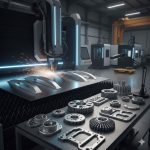
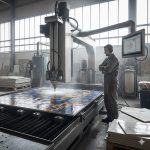

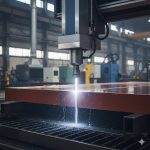
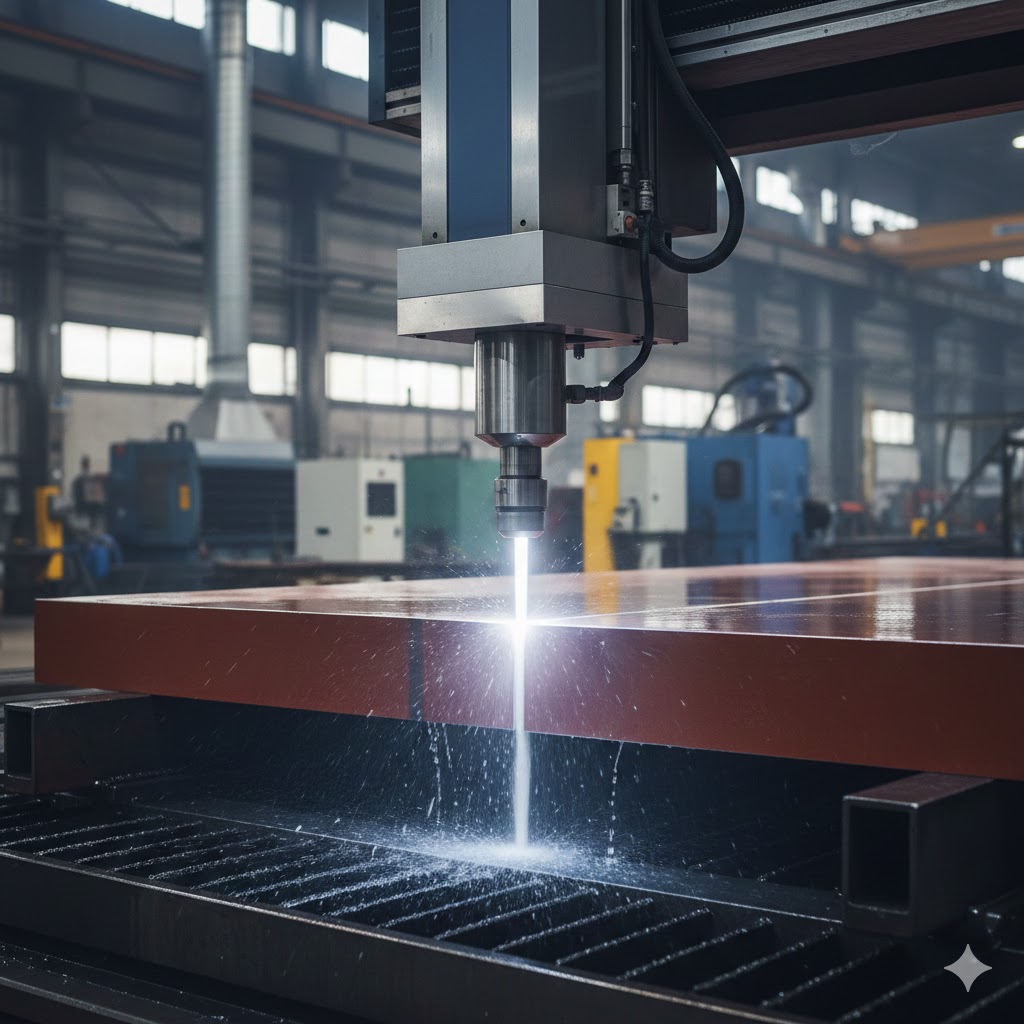

Precision components in aerospace and automotive manufacturing require strict tolerances and reliable material properties. Thermal cutting processes such as laser, plasma, or oxy-fuel introduce heat that can alter a part’s characteristics. Even minor heat effects can affect downstream operations, inspection results, and tool life. Industrial waterjet cutting preserves material integrity while delivering precise dimensions. This method ensures that parts meet quality standards and production expectations consistently.
Waterjet cutting minimizes distortion and maintains structural strength, surface finish, and performance of components. It supports predictable production outcomes while reducing rework and scrap. Manufacturers benefit from improved reliability across complex or sensitive parts. Integrating waterjet technology into operations enhances efficiency without compromising quality. By adopting this approach, manufacturers ensure consistent, high-quality results for critical aerospace and automotive components.
Three Thermal Effects That Can Influence Part Quality
Manufacturers face three common thermal effects from traditional cutting processes that may affect material integrity and precision. Understanding these mechanisms helps determine the appropriate cutting solution.
Heat-Affected Zone Formation
Thermal methods generate zones around the cut edge where microstructural changes occur. In metals, this may alter hardness and tensile strength. Heat can create material variations extending 0.5 millimeters or more into the part. These changes influence fatigue resistance and performance in stress-sensitive applications.
Thermal Warping and Dimensional Shift
Heat introduces expansion during cutting and contraction during cooling, creating slight dimensional changes. Thin materials and large sheets are most sensitive. Maintaining flatness and exact dimensions is critical in production, and even small shifts can require additional inspection and finishing.
Edge Hardening and Brittleness
Rapid heating and cooling can increase surface hardness at cut edges, making them more brittle. This can influence forming, welding, or machining processes. Stable material properties at the edges support consistent secondary operations and reduce tool wear.
How Waterjet Cutting Preserves Material Integrity
Industrial waterjet cutting uses a high-pressure water stream with abrasive particles to remove material through erosion, keeping cutting zones near ambient temperature. Temperatures rarely exceed 200 degrees Fahrenheit, preventing thermal expansion, microstructural changes, and hardened edges.
Key Advantages of Cold Cutting
- Zero Heat-Affected Zone Formation maintains the original grain structure and hardness.
- Dimensional Stability allows parts to meet tolerance immediately after cutting.
- Consistent Edge Quality supports forming, welding, and machining without additional preparation.
Temperature Comparisons
- Laser cutting can reach 2,000 to 3,000 degrees Fahrenheit.
- Plasma cutting exceeds 25,000 degrees Fahrenheit at the arc.
- Oxy-fuel cutting reaches 5,000 to 6,000 degrees Fahrenheit.
- Waterjet cutting remains below 200 degrees Fahrenheit.
This low-temperature process prevents changes in material properties, supporting precise and predictable outcomes in manufacturing.
Material-Specific Applications
The benefits of industrial waterjet cutting extend across various materials, improving part quality and consistency.
Hardened Tool Steels and High-Strength Alloys
Waterjet cutting maintains factory heat treatment, reducing the need for stress-relief annealing and facilitating smooth secondary machining.
Aluminum and Non-Ferrous Metals
Cold cutting prevents warping in thin sheets and large formats, maintaining flatness and meeting tight tolerances without additional finishing.
Titanium and Aerospace Alloys
Temperature-sensitive alloys retain mechanical properties, ensuring certification standards are met and parts withstand testing and inspection.
Composite Materials
Resin matrices and fibers remain intact during waterjet cutting, preserving structural strength and surface quality without delamination or cracking.
Stainless Steel and Corrosion-Resistant Alloys
Chromium carbide distribution and passivation layers remain stable, supporting corrosion resistance and eliminating additional surface treatment steps.
Glass, Ceramics, and Stone
Thermal stress is avoided, enabling intricate geometries without cracking or fracture and allowing complex designs in brittle materials.
Supporting Downstream Manufacturing
Maintaining material integrity with waterjet cutting enhances subsequent manufacturing processes.
- Welding Operations: Consistent edge properties allow uniform weld penetration and reduce preparation steps for HAZ removal.
- Secondary Machining: Edges cut with waterjets remain soft and uniform, minimizing tool wear and supporting predictable machining results.
- Forming and Bending: Ductility is maintained, ensuring consistent bending and springback behavior without edge cracking.
- Surface Treatment and Coating: Uniform surfaces accept coatings evenly, meeting finish specifications without additional preparation.
- Quality Inspection: Parts retain dimensions, remain within tolerance, and experience lower rejection rates during final inspection.
Precision and Capability
Industrial waterjet cutting delivers high precision and reliable performance in demanding applications.
- Tolerance: ±0.003 inch positional accuracy.
- Repeatability: Consistent across multiple production runs.
- Complex Geometries: Tight radii, intricate patterns, and materials up to 8 inches thick.
- Edge Quality: Smooth surfaces with minimal finishing requirements.
This combination of precision and preserved material properties allows engineers to achieve exact specifications while maintaining part integrity.
Manufacturing Without Thermal Constraints
Waterjet cutting provides flexibility across a wide range of materials, supporting designs that require stable mechanical properties and tight tolerances. It enables consistent production of high-quality components while reducing waste and lowering overall costs. The process simplifies downstream operations by delivering parts ready for assembly or finishing. Hydro-Lazer combines advanced equipment with expertise to ensure reliable and precise results. Our approach supports repeatable outcomes across metals, composites, and brittle materials.
Precision and durability are central to industrial operations that rely on waterjet technology. Parts maintain dimensional stability without introducing stress or heat-related distortion. High tolerances are achieved consistently across production runs. Hydro-Lazer systems are calibrated to meet demanding specifications for multiple industries. We help manufacturing teams achieve accuracy, efficiency, and cost-effective performance through controlled cutting processes.